Style Ideas
Masculine Bedroom Design Basics
How to build a masculine bedroom with dark tones, leather, and hard lines - the ratios that keep it warm instead of gloomy.
By Mara Bennett · Published June 24, 2026 · Updated June 24, 2026
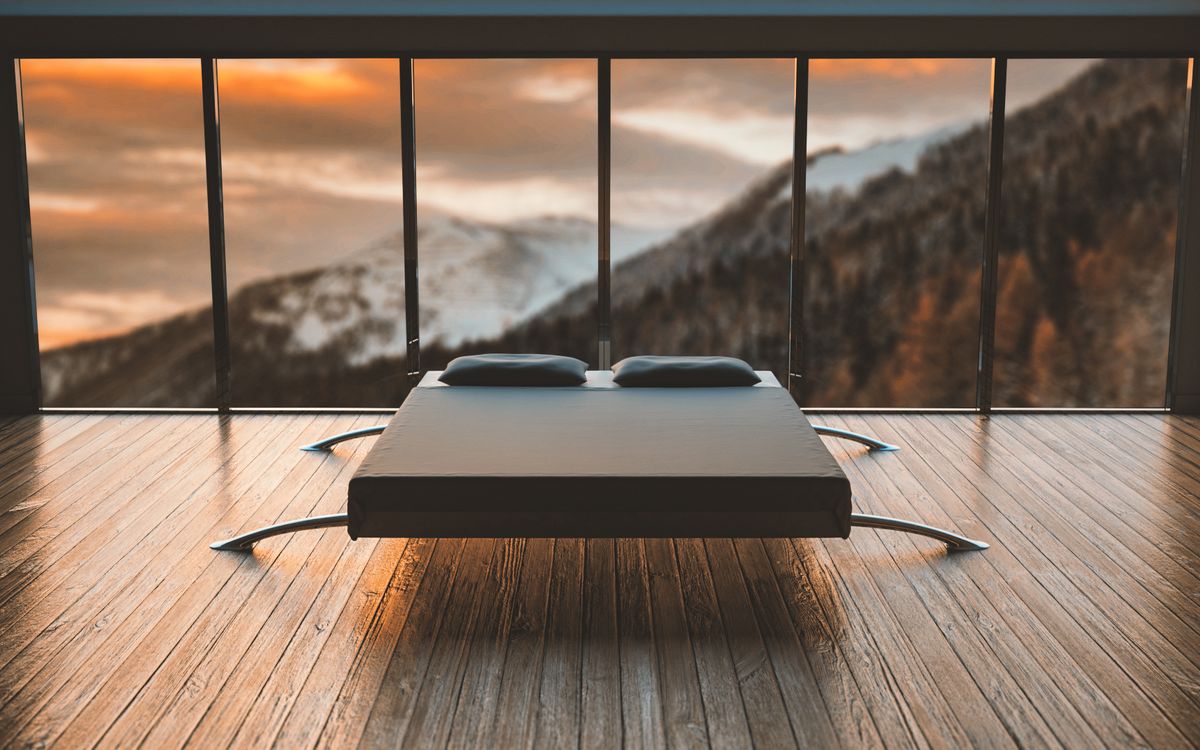
A masculine bedroom is not a bedroom painted black. Done well, it is a question of proportion: how much dark, how much leather, how much hard line - and against what background. The rooms that fail all fail the same way, with every surface at maximum weight, so the space reads as a furniture showroom at closing time. The rooms that work are mixed like a drink, with the strong ingredient measured against something soft and warm.
These are the ratios I use, refined over ten years of small-bedroom projects where someone wanted the room to feel grounded rather than decorated.
Start with the ratio, not the palette
Before choosing a single color, decide the split between heavy and light. My working ratio is roughly one-third heavy, two-thirds light. Heavy means the dark surfaces - the bed wall, the leather, the blackened steel, the walnut - and light means warm whites, oatmeal linen, pale wood, and anything that holds daylight.
The one-third line is where most rooms go wrong in both directions. Under a third of dark and the scheme reads as ordinary neutrals with one moody object; over about half, and a bedroom starts losing the visual edges that make a small room navigable. I keep the ratio in mind the way I keep clearance numbers - as the check that happens before purchase, not after. If you already lean cool-toned, the tone temperature notes I keep on warm versus cool bedroom tones settle which side of neutral to build on.
The dark palette that doesn’t cave in
The dependable dark palette is built on hue with weight, not black paint. Charcoal grey, ink blue, deep forest green, and warm umber all read as dark while keeping some warmth in the room. True black works, but only on one plane - a single wall, the bed frame, the window frames - never on every surface at once.
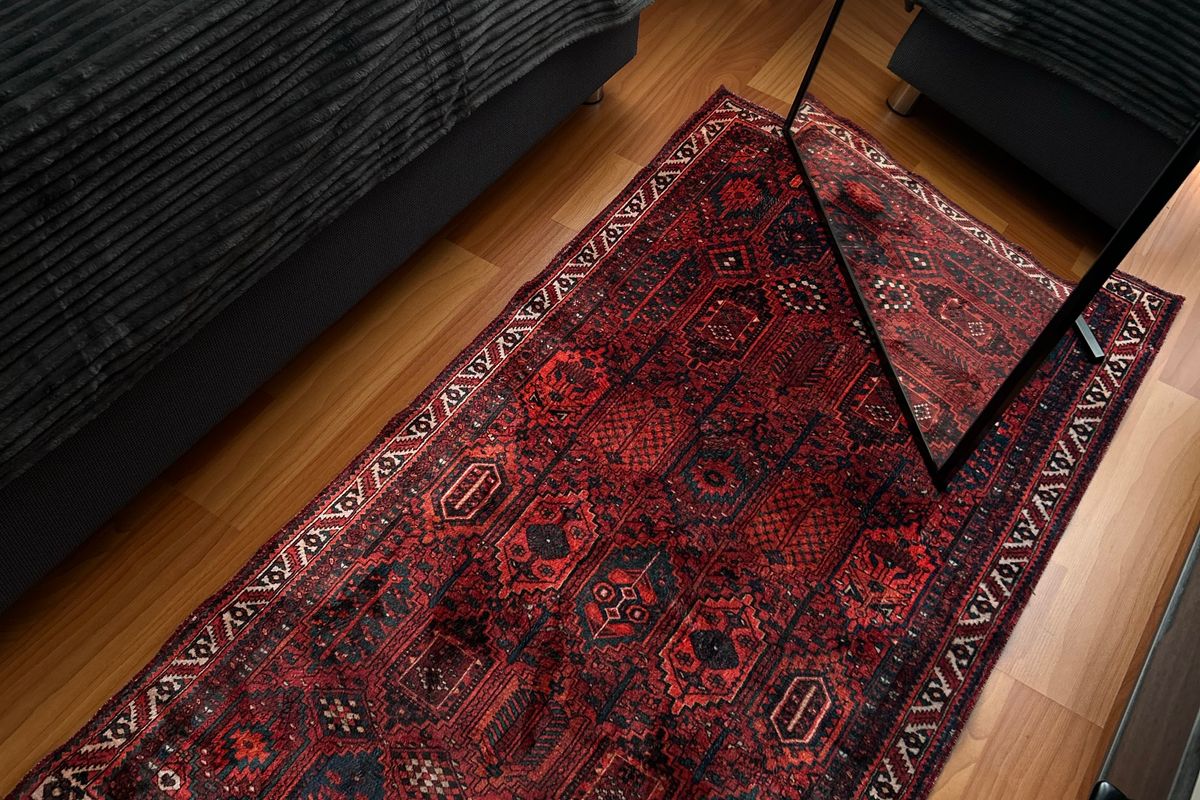
Where the dark goes matters as much as which dark it is. I put it on the bed wall first, because the largest textile mass (the bed) sits there and absorbs some of the intensity. Dark on the floor plane - a dark rug, stained floorboards - grounds the scheme but makes the room feel shorter, so I prefer dark up high or behind the bed and lighter underfoot. One saturated counterweight, like the deep red rug beside the bed in the photo above, is often the single move that keeps a dark scheme from feeling airless. If you would rather start from finished combinations, the mood-sorted palettes I keep include two that suit this direction.
Leather, wood, and metal: the hard-material trio
Masculine rooms earn their character through material, not ornament. Three materials carry almost the whole job. Leather - a brown aviation chair, a campaign-style bench, even a single bolster - brings a warm, worn texture no fabric matches. Wood in matte, open-grain finishes like walnut, smoked oak, or dark ash reads as substantial without gloss. Metal appears as thin black frames: bed legs, lamp stems, window grids.
The mixing rule I follow is the same three-material discipline I describe in my texture notes: three strong materials per room, one of them allowed to repeat. Leather repeats as belt-and-buckle details on a throw, a strap on a wall shelf, a handle on the dresser. When a fourth hard material enters the room, something soft has to leave, or the scheme tips into costume.
Matte is non-negotiable. Gloss on dark surfaces turns every lamp into a glare source and every wall into a mirror of the window. The same dresser in matte stain and high-gloss lacquer produces two completely different rooms, and only one of them sleeps well.
Lines that read masculine
Geometry does quiet work here. Straight lines, square edges, and visible structure - an exposed frame on the bed, slatted wood, riveted leather - read as engineered rather than decorated. Curves are not banned; they are rationed. One rounded piece, a drum shade or a curved lounge chair, keeps the room from feeling like a filing cabinet.
Weight also comes from thickness. A bed frame with 10 cm (4 in) legs and a chunky rail reads heavier than a slimmer frame at the same size, and that visual mass is what most people are asking for when they say masculine. Thin, spindly silhouettes undercut the palette no matter how dark the paint is. When I spec a bed for this direction, I look at leg gauge and rail thickness before fabric or finish - the same structural attention I pay when comparing bed frames for small rooms, where the frame usually doubles as the room’s biggest dark object.
Bedding that keeps it from going cold
Dark walls and hard lines need bedding that absorbs light rather than reflecting it. Washed linen in stone, clay, or faded olive, a heavyweight quilted coverlet, and a wool or brushed-cotton throw in a heathered grey all lower the temperature of the scheme by touch. White sheets are not off-limits - a stack of off-white pillows against a dark headboard is one of the oldest, best contrasts in the vocabulary - but pure crisp percale white reads hotel-clinical in a charcoal room, so I lean toward natural undyed shades.
Pattern stays geometric and sparse: a stripe, a herringbone, a dark plaid. I avoid large botanicals and bright prints here; they belong to the softer side of the style spectrum.
Lighting: the third dimension of dark
A dark bedroom lives or dies at night. One ceiling fixture bouncing off charcoal walls produces a cave; three low, warm sources produce a lounge. I layer a pair of bedside lights at 2700K, a floor or table lamp with a metal shade that leaks a slice of light from the rim, and one accent source aimed at texture - a picture light on leather, a small uplight behind the headboard. Dark surfaces need light to graze across them at an angle, or they flatten into black rectangles after dusk.
The mistakes I see
Three failures repeat. The first is all-dark-everything, already covered - it is the mistake that gives the style its gloomy reputation. The second is showroom staging: a room so coordinated it looks untouched, solved by keeping one lived-in element, an unmade corner, a stack of actual books. The third is metal overload, where black frames multiply across the bed, the lamps, the mirror, and the picture frames until the room hums. When the frames multiply, I pick the two that matter - usually the bed and one lamp - and swap the rest for wood.
Get the ratio right and the style asks nothing else of you. A masculine bedroom, at its best, is simply a calm room with its weight distributed honestly.
Frequently asked questions
- What colors make a bedroom look masculine?
- Deep, low-saturation tones: charcoal, ink blue, forest green, warm grey, and near-black, paired with warm neutrals for balance. The masculine feel comes from depth and contrast rather than any single color.
- How do I keep a dark bedroom from feeling gloomy?
- Keep roughly two-thirds of the room in lighter or warmer materials and reserve dark paint or textiles for one plane, usually the bed wall. Layer at least three light sources so the dark surfaces glow instead of disappearing at night.
- Is dark furniture okay in a small bedroom?
- Yes, in controlled doses. One large dark piece anchors a small room; several dark pieces together shrink it. Choose the bed or the dresser as the dark anchor and keep the surrounding pieces lighter.