Style Ideas
The Best Dressers for Small Bedrooms
Three dressers that fit small bedrooms - a low wide NORDLI, a narrow solid-pine HEMNES chest, and a budget KRONÖREN - with verified footprint numbers.
By Mara Bennett · Published September 9, 2026 · Updated September 9, 2026
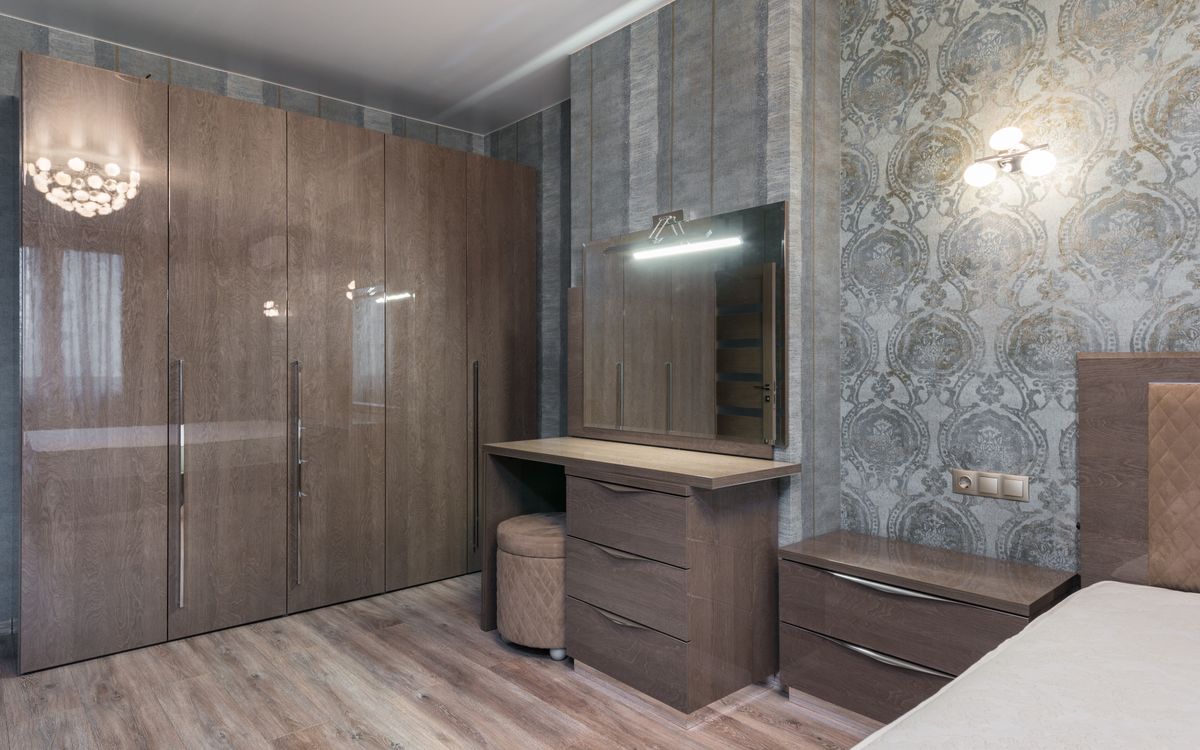
Dressers are where small bedrooms quietly fail. The bed gets measured, the nightstand gets eyeballed, and then a 55 cm (21 5/8 in) deep dresser arrives and the drawers open 20 cm (8 in) because the walkway would not allow more. The fix is not better taste; it is treating the dresser as a footprint problem first - two numbers, depth and width, checked against the room before the style conversation starts.
Three dressers cover the realistic footprints a small bedroom can carry, and all three come with dimensions I have pulled from the manufacturer listings rather than estimated.
The two numbers that decide fit
Depth first, because depth is what breaks rooms. A standard dresser runs 45-50 cm (18-20 in) deep, and every drawer needs its own travel in front: 55 cm (21 5/8 in) of clearance minimum, 60 cm (24 in) if the drawer front is deep or the dresser sits on a real walkway. That means a conventional dresser against a passage wall consumes over a meter (3 ft 4 in) of floor depth - the number people forget when the room is only 2.7 m (9 ft) wide. When the numbers come up short, the answers are a shallower unit around 40 cm (16 in), a tall chest that trades width for depth, or a placement where the drawer clearance overlaps the bedside clearance instead of doubling it - the seven placement options I set out in the dresser placement guide all hinge on this overlap trick.
Width second. The width the room can afford is the wall run minus the bed, minus 60 cm (24 in) of passage. In a 3x3 m (10x10 ft) room that often leaves only 50-55 cm (20-22 in) - exactly the width of a narrow two-drawer chest. Writing both numbers on the measure sheet before shopping turns the dresser search from browsing into filtering.
How I chose the three dressers
The method is the one I apply in every client room with a tight floor plan. I pull the manufacturer listings for exact dimensions, weights, and materials, confirm the price on the US retail page, and then check each unit against the two-numbers test above. I have not lived with these dressers for a year, and I will not claim I have; what ten years of small-bedroom projects gives me is the ability to read a spec sheet and predict which drawer will jam, which front will bow, and which footprint survives a room where someone actually opens drawers every morning.
The picks form three footprints, not three styles: a low wide dresser for rooms with a free wall, a narrow solid-wood chest for the wall beside the bed, and a budget unit for rooms being set up for the first time.
Pick one: IKEA NORDLI 4-drawer dresser
IKEA NORDLI 4-drawer dresser, $249.99, per the IKEA US listing.
The NORDLI four-drawer unit is the low-wide pick, and its spec sheet reads like it was written for small rooms. It measures 80x47x53 cm (31 1/2x18 1/2x20 7/8 in) - a 53 cm (20 7/8 in) top that sits just below nightstand height, which is the trick: the dresser doubles as a surface for a lamp, a carafe, or a mirror, and in some layouts I place it directly beside the bed where a second nightstand would stand. Four drawers at that footprint hold a surprising volume; IKEA’s own guidance puts the modular family at roughly 100 medium T-shirts for a comparable unit, and the four-drawer dresser carries deep, full-width drawers on soft-closing runners with concealed rails that keep running smoothly when the drawers are loaded.
The trade-off is the one all low dressers carry: 80 cm (31 1/2 in) of width is a real wall claim, so this unit needs the free wall - under a window is ideal, since its 53 cm (20 7/8 in) height stays below most sills. The NORDLI series is modular, which is the quiet long-term argument: start with this dresser, and the same units stack and extend up to the system’s recommended 145 cm (57 in) maximum if the household grows. Wall anchoring comes as an included kit, and at this height and weight, it is not optional.
Pick two: IKEA HEMNES 2-drawer chest
IKEA HEMNES 2-drawer chest (black-brown), $149.99, rated 4.5 (1,204 reviews) on the IKEA US listing.
The HEMNES two-drawer chest is the narrow-footprint pick, built for the exact situation where a standard dresser cannot fit: the wall beside the bed. At 54 cm (21 1/4 in) wide and 66 cm (26 in) tall in solid pine, it slots into the gap between bed and corner that nothing else useful occupies, giving two genuine drawers plus a top surface at pillow-adjacent height. It is the piece I reach for in rooms under 9 m² (97 sq ft), where the dresser decision is really a decision about what survives the width budget.
Solid pine is the material argument. In a category dominated by foil-wrapped particleboard, a solid-wood chest with a stained finish takes knocks, resurfaces, and ages visibly rather than peeling invisibly - and the rating history agrees, with 1,204 reviews averaging 4.5, one of the strongest records in IKEA’s bedroom line. The trade-off is honest arithmetic: two drawers hold roughly what three shallow drawers hold elsewhere, and the chest will not carry a household’s folded clothes alone. It works as the bedside-side unit paired with a wardrobe, or in pairs along a wall where a wide dresser cannot squeeze through the door swing.
Pick three: IKEA KRONÖREN 2-drawer chest
IKEA KRONÖREN 2-drawer chest (pine), $49.99, rated 4.5 (51 reviews) on the IKEA US listing.
The KRONÖREN is the budget pick, and the one that makes first-apartment math work. It measures 76x48x55 cm (29 7/8x18 7/8x21 5/8 in) in solid pine - a full-size dresser footprint in both directions, at a price that leaves room in the budget for the mattress that actually decides sleep quality. The two drawers run the full width of the chest, and the solid pine top survives the lamp-book-charge pile that every real nightstand surface becomes.
The trade-offs are the ones $49.99 implies. The pine is raw-toned and simply finished; the drawer hardware is functional rather than refined; and two drawers cap the capacity at the essentials-plus level. What the spec sheet does confirm is the part that matters in a small room: the 48 cm (18 7/8 in) depth is standard, so it demands the same 60 cm (24 in) drawer clearance as any conventional dresser, and the 76 cm (29 7/8 in) width fits under most windows. For a guest room, a child’s room, or a first room, it covers the job until the household grows into the NORDLI or the HEMNES.
Side-by-side comparison
| IKEA NORDLI 4-drawer dresser | IKEA HEMNES 2-drawer chest | IKEA KRONÖREN 2-drawer chest | |
|---|---|---|---|
| Price | $249.99 | $149.99 | $49.99 |
| Width | 80 cm (31 1/2 in) | 54 cm (21 1/4 in) | 76 cm (29 7/8 in) |
| Height | 53 cm (20 7/8 in) | 66 cm (26 in) | 55 cm (21 5/8 in) |
| Material | Foil-wrapped board, soft-closing drawers | Solid pine | Solid pine |
| Rating | Not rated here | 4.5 (1,204) | 4.5 (51) |
Read the table as three footprints: the 80 cm (31 1/2 in) wide unit needs a free wall, the 54 cm (21 1/4 in) chest needs only a bedside gap, and the 76 cm (29 7/8 in) budget unit needs a window.
Where each one belongs in a small room
Placement decides whether these footprints work. The NORDLI, at 47 cm (18 1/2 in) deep, fits opposite the bed only where the room depth exceeds 3 m (10 ft); otherwise it goes under the window, where no walkway crosses its drawer arc. The HEMNES 2-drawer sits beside the bed, where its drawer clearance overlaps the bedside clearance you already need - the overlap that makes it free in floor-plan terms. If overflow storage outgrows it, the vertical moves I collect in the tiny-bedroom storage playbook take over from there. The KRONÖREN takes the wall by the door, where its modest depth keeps the entry swing clear. All of these placements assume the 60 cm (24 in) drawer figure, which is the same clearance arithmetic that governs the whole room in my measurements guide.
Anchor it, and the safety note
Every dresser on this list is a tip-over candidate in a real household with drawers, children, or both. All three ship with wall-anchoring hardware, and the 53-66 cm (21-26 in) tops invite leaning and climbing in exactly the way that empty furniture does not. Anchoring takes fifteen minutes and a stud finder; skipping it is the single most dangerous shortcut available in bedroom furnishing. The rule I apply on every job, without exception: no free-standing dresser above 60 cm (24 in) tall stays unanchored, and neither should the one in your room.
A small-bedroom dresser, chosen by footprint and placed by clearance, is one of the few purchases that makes the room better the day it arrives and every day after. The style of the front panel, whatever you choose, is the smallest number in the equation.
The picks
Some links below are affiliate links — we may earn a commission at no extra cost to you.
IKEA NORDLI 4-drawer dresser
Best for: Rooms with a free wall under a window and storage that needs a working surface
80x47x53 cm (31 1/2x18 1/2x20 7/8 in) puts a full four drawers under a top that sits just below nightstand height, on soft-closing runners. Part of a modular series that can grow up to the system's recommended 145 cm (57 in). The trade-off: 80 cm (31 1/2 in) of width is a real wall claim, and it anchors to the wall non-negotiably.
IKEA HEMNES 2-drawer chest
Best for: The wall beside the bed, where no standard dresser fits
54 cm (21 1/4 in) wide and 66 cm (26 in) tall in solid pine, sized for the gap between bed and corner, with two genuine drawers. 4.5 across 1,204 reviews is one of the strongest records in the category. The trade-off: two drawers cap the capacity, so it pairs with a wardrobe rather than replacing a full dresser.
IKEA KRONÖREN 2-drawer chest
Best for: First rooms, guest rooms, and any budget that prioritizes the mattress
76x48x55 cm (29 7/8x18 7/8x21 5/8 in) of solid pine for $49.99, with full-width drawers and a top that survives real daily use. 4.5 across 51 reviews backs the basic build. The trade-off: modest hardware and simple finish, and the standard 48 cm (18 7/8 in) depth still demands the full 60 cm (24 in) drawer clearance.
Comparison
| Specification | IKEA NORDLI 4-drawer dresser | IKEA HEMNES 2-drawer chest | IKEA KRONÖREN 2-drawer chest |
|---|---|---|---|
| Width | 80 cm (31 1/2 in) | 54 cm (21 1/4 in) | 76 cm (29 7/8 in) |
| Height | 53 cm (20 7/8 in) | 66 cm (26 in) | 55 cm (21 5/8 in) |
| Material | Foil-wrapped board | Solid pine | Solid pine |
| Drawers | 4, soft-closing | 2 | 2 |
| Price | $249.99 | $149.99 | $49.99 |
Sources
- IKEA US low dressers category and product listings for NORDLI, HEMNES, and KRONÖREN (ikea.com/us/en)
- IKEA product pages for the NORDLI series, including stacking guidance and anchoring kit details (ikea.com)
Frequently asked questions
- What dresser depth works in a small bedroom?
- 45-50 cm (18-20 in) is the standard depth and needs about 60 cm (24 in) of clearance in front for drawers to open. If the room cannot spare that, look for shallower units around 40 cm (16 in) or place the dresser beside the bed where the clearance overlaps the walkway.
- How wide should a dresser be for a small bedroom?
- Measure the wall run and subtract the bed plus 60 cm (24 in) of passage first. Narrow dressers 50-55 cm (20-22 in) wide fit beside a bed; wide low dressers 80 cm (31 1/2 in) work under a window or opposite the bed where no walkway crosses.
- Is it better to get a tall chest or a wide low dresser in a small room?
- A tall chest saves floor area but wall space; a low dresser saves wall space but claims floor. In rooms under 9 m² (97 sq ft) I default to the tall narrow chest beside the bed, and reserve the low dresser for rooms with a free wall under a window.