Style Ideas
Headboard Styles, Explained
The four headboard types worth knowing - panel, upholstered, wingback, and none - and what each one costs you in space, care, and quiet.
By Mara Bennett · Published June 8, 2026 · Updated June 29, 2026
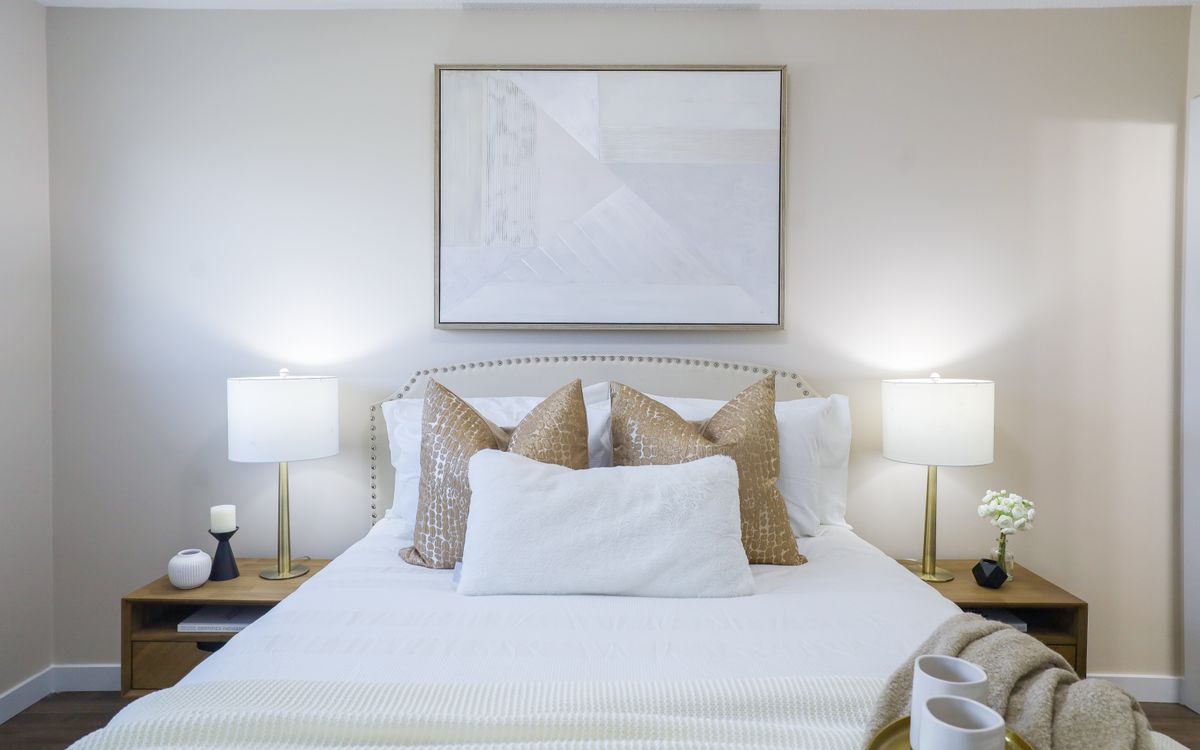
The headboard is the piece of furniture your bed wears on its face. You see it first when you walk in, guests see it from the door, and you see it lying down every night. Yet it is also the most misjudged purchase in the bedroom, because people shop for it by looks alone and discover the trade-offs later - the wingback that eats 15 cm (6 in) of floor depth, the linen headboard that holds a decade of dust, the slatted panel that rattles every time you lean back to read.
After ten years of styling bedrooms, I sort every headboard into four groups: panel, upholstered, wingback, and none. Knowing which group you need answers most of the shopping questions before you fall for a fabric.
Why the headboard matters more than its price
A headboard does three jobs. It stops pillows from migrating into the gap between mattress and wall, it protects the wall from scuffs and hair oil, and it anchors the composition of the whole bed wall. The first two are practical; the third is why a bare bed against a bare wall can read unfinished even when the bedding is expensive.
It also carries a surprising amount of the room’s style budget. When someone says a room “looks designed,” they are often registering one deliberate object on the bed wall - a headboard with a real silhouette. That is why I treat the headboard as a styling decision first and a furniture purchase second. If you want a second opinion on the layering that goes in front of it, my notes on how to style a bed like a designer cover the pillows and throws.
Panel headboards: the quiet default
A panel headboard is a flat or slatted board, usually wood or painted MDF, standing upright behind the pillows. It is the default because it earns the position: it is thin, it is durable, it takes paint, and it does not compete with patterned bedding.
The advantages are practical. A panel adds almost no depth to the bed footprint, which matters in rooms where the walkway is measured in centimeters. It wipes clean with a damp cloth. Wood panels also age better than fabric - a scratch becomes patina instead of a stain. If you buy a frame from a flat-pack range, the matching panel headboard usually bolts straight on, so the bed stays one visual unit.
The trade-off is comfort and acoustic softness. Leaning back against a wooden panel for a long read is harder on the spine and noisier than leaning into padding. Rooms with panel beds also tend to sound slightly harder - you notice it when the headboard meets a bare wall and everything echoes a touch. A textile wall hanging or a tall padded cushion behind the shoulders fixes this cheaply.

Upholstered headboards: softness with upkeep
An upholstered headboard wraps padding - foam over a timber frame - in fabric or leather. This is the category that makes reading in bed a pleasure, because the surface gives instead of pushing back. It also absorbs sound, which is why upholstered beds feel quieter in rooms with hard floors.
The costs are maintenance and mass. Fabric picks up hair oil and dust around the top edge where pillows sit, and light colors show it. Leather handles this better but needs conditioning. An upholstered headboard is also physically deeper, typically 8-15 cm (3-6 in), which shortens the usable walkway by the same amount. In my experience the honest question is not “do I like the look” but “will I vacuum the top of my headboard twice a year.” If the answer is no, choose leather, or choose a panel and add a large backrest cushion.
Wingback headboards: drama that charges rent
The wingback extends wings forward on both sides of the head. Styled well, it frames the bed like a fireplace surround and gives the tallest visual anchor of the four types. It is the choice when the bed wall is long, the ceiling is generous, and the room needs a single confident gesture.
That gesture charges rent in three currencies. Height - wingbacks often run 130-150 cm (51-59 in) or more from the floor, which dwarfs a 2.4 m (8 ft) ceiling in a small room. Depth - the wings can add 15 cm (6 in) or more to the bed’s footprint. And bedding - tall headboards shrink visually behind a thick duvet folded at the foot, so the bed styling has to be coordinated. I only specify wingbacks in rooms where the bed has at least 60 cm (24 in) of clearance on both sides; in tighter rooms the wings read as obstacles, not architecture.
Going without: the no-headboard room
The fourth style is no headboard at all, and it is underrated. A bed pushed against a clean painted wall, one wide hanging light on each side, and two or three oversized cushions propped for reading does everything a headboard does, without spending a centimeter of floor depth.
This is my default suggestion for rooms under about 2.7 m (9 ft) wide and for bedrooms where the bed sits in front of a window, where a tall board would block the glass. It also suits renters: no headboard means one less object to move, and a wall color chosen well does the anchoring for free. The room leans on lighting and bedding instead - which, if you are working without a ceiling fixture, is exactly the situation covered in my guide to lighting a bedroom without overhead lights.
Height, width, and the numbers that matter
Whatever type you choose, two measurements decide whether it will look right. Width: the headboard should match the mattress width or add no more than 5 cm (2 in) per side. Wider headboards make a queen bed read like a monument and complicate nightstand placement. Height: 100-130 cm (39-51 in) from the floor covers most needs, putting 25-40 cm (10-16 in) of visible board above the pillows. Above that range, you are buying wall art, and it should be judged as such.
One check people skip: the headboard must clear the window sill or radiator if the bed backs onto either, and it needs the wall-anchoring kit on taller models. A rocking headboard is the loudest thing in a quiet bedroom.
Matching the headboard to the room
I choose the type from the room, not the catalog. Small rooms get panels or nothing - both protect the walkway. Rooms where someone actually reads in bed every night get upholstery, because that comfort is used daily. Rooms with long, uninterrupted walls and a calm color plan get wingbacks, since they supply the drama other elements will not. And if the rest of the room already has a strong focal point - a large artwork, an accent wall - the headboard steps back down to a quiet panel so nothing competes.
If you are pairing a headboard with a new frame in a tight room, start from the frames I rate for small bedrooms, then match the headboard type to whatever footprint the frame leaves behind.
The trade-offs, stated plainly
Panels trade comfort for depth and durability. Upholstery trades upkeep for softness and quiet. Wingbacks trade floor space and ceiling height for presence. Nothing trades anything, and the room leans on wall color and lighting instead. None of these is the wrong choice; the wrong choice is buying the one you found first, then discovering the wings or the linen upkeep in the room you actually live in.
Frequently asked questions
- What height should a headboard be?
- A practical range is 100-130 cm (39-51 in) from the floor, which puts the padding above the pillows for most mattresses. Anything much taller works visually but wastes material and can feel imposing in a small room.
- Can I add a headboard to a platform bed?
- Usually yes. Many platform frames carry a bolt-on headboard, and freestanding headboards that sit between the wall and the frame are an option when the frame has no mounting points. Check the bolt spacing before buying.
- Do you need a headboard at all?
- No. A bed pushed against a clean, well-painted wall, a mounted reading light, and a row of large cushions can do the same job. Skipping the headboard saves floor depth and often looks calmer in small rooms.