Layout Planning
The Best Space-Saving Nightstands for Tight Rooms
Three bedside pieces that keep the surface and lose the footprint - a narrow table, a wall-mounted cabinet, and a rolling cart - with the trade-offs of each.
By Mara Bennett · Published June 1, 2026 · Updated June 1, 2026
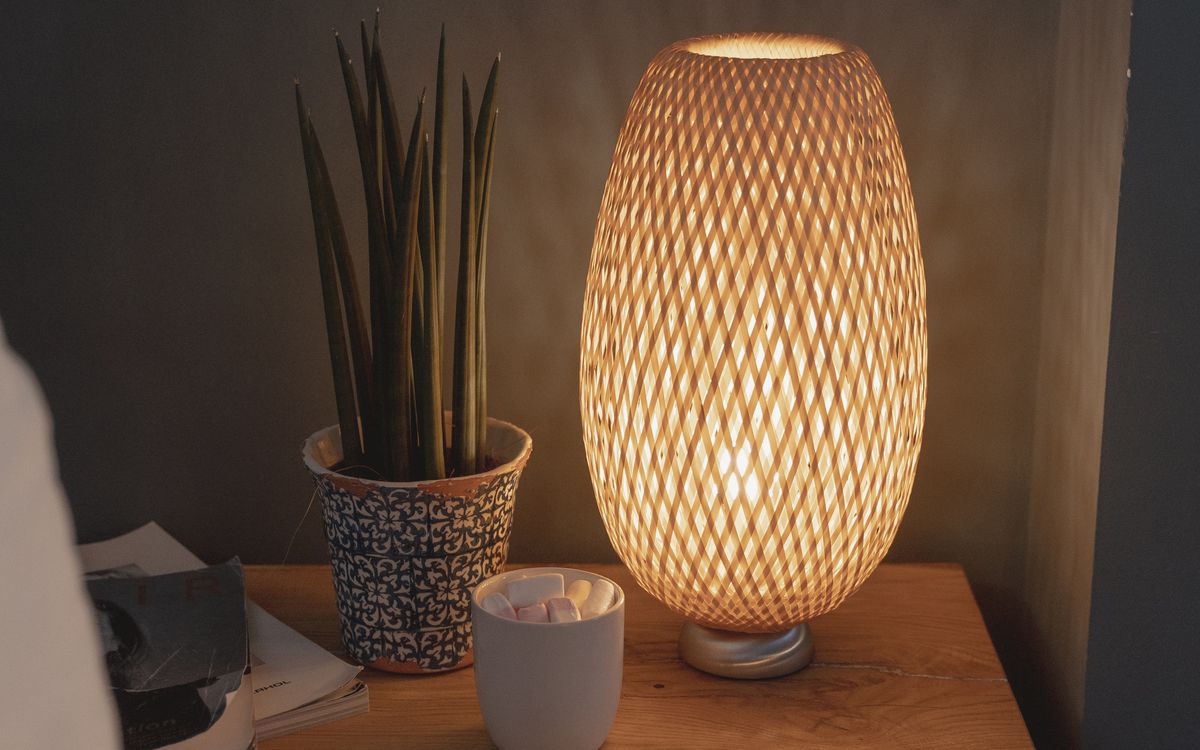
The nightstand is where small bedrooms leak floor without anyone noticing. A conventional bedside table claims a 45-50 cm (18-20 in) square - roughly a quarter of a square metre - on each side of the bed, and in a tight room that is an aisle’s worth of floor spent holding a lamp and a phone. The good news is that the bedside function survives radical downsizing: three categories of piece do the nightstand’s job on a fraction of the footprint, and each suits a different kind of tight room. This piece walks through the three I reach for, with the verified numbers and the trade-offs each one asks for.
What space-saving has to mean at the bedside
Nightstand function reduces to three things: a surface within arm’s reach of the pillow, enough capacity for the bedside clutter of one or two people, and stability under a lamp. Everything beyond that - depth of drawers, closed storage, a solid top - is negotiable. The space-saving versions each give up one of the negotiables deliberately: the narrow table gives up surface area, the wall cabinet gives up the floor contact, the rolling cart gives up the solid top.
Two numbers frame the whole decision. First, the reach zone: everything the sleeper touches at night must sit within roughly 30 cm (12 in) of the mattress edge, so height matters as much as width - a surface at mattress-top height, give or take 10 cm (4 in), is the target. Second, the footprint budget: measure the actual gap between bed and wall before shopping, because a piece that fits the room’s idea of a nightstand but not its measured gap will spend its life blocking a drawer or wedged at an angle.
How I picked these three
The shortlist came from fitting real bedside gaps, then verifying dimensions and prices against official product pages at the time of writing. Criteria: a footprint well under the conventional 45-50 cm (18-20 in) square, a genuine bedside function rather than a decorative afterthought, and a design that does not need custom work to install. I ruled out anything whose clearance requirements exceeded the gap it was meant to fill, anything I could not verify directly with the manufacturer, and anything whose savings existed only on a spec sheet. Two of the three I have specified many times in client rooms; the third is the one I pull out when the bedside gap is not a gap at all but a leftover 20 cm (8 in).
Pick 1: IKEA VIHALS bedside table
The IKEA VIHALS bedside table is the narrow-pick, and its argument is a footprint of 37 x 37 cm (14 5/8 x 14 5/8 in) - a compact square that claims roughly half the floor of a conventional nightstand while keeping a full-height, freestanding bedside presence. The white finish and simple lines sit quietly against most bed styles, and the piece stands at normal nightstand height, so the lamp lands within the reach zone without any tricks. IKEA’s own listings for the VIHALS bedside table carry consistently strong review scores across its markets, which matters for a piece that gets leaned on and opened nightly.
The trade-off is surface discipline. A 37 cm (14 5/8 in) square holds a lamp or a book and a glass, but not all three plus a charging cable, and the top fills fast if the bedside habits include creams, medicines, or a full water carafe. It is the right pick when the floor is the scarce resource and the bedside clutter is already under control; it is the wrong pick for anyone whose nightstand currently looks like a shelf of a chemist’s shop.
Pick 2: IKEA EKET cabinet
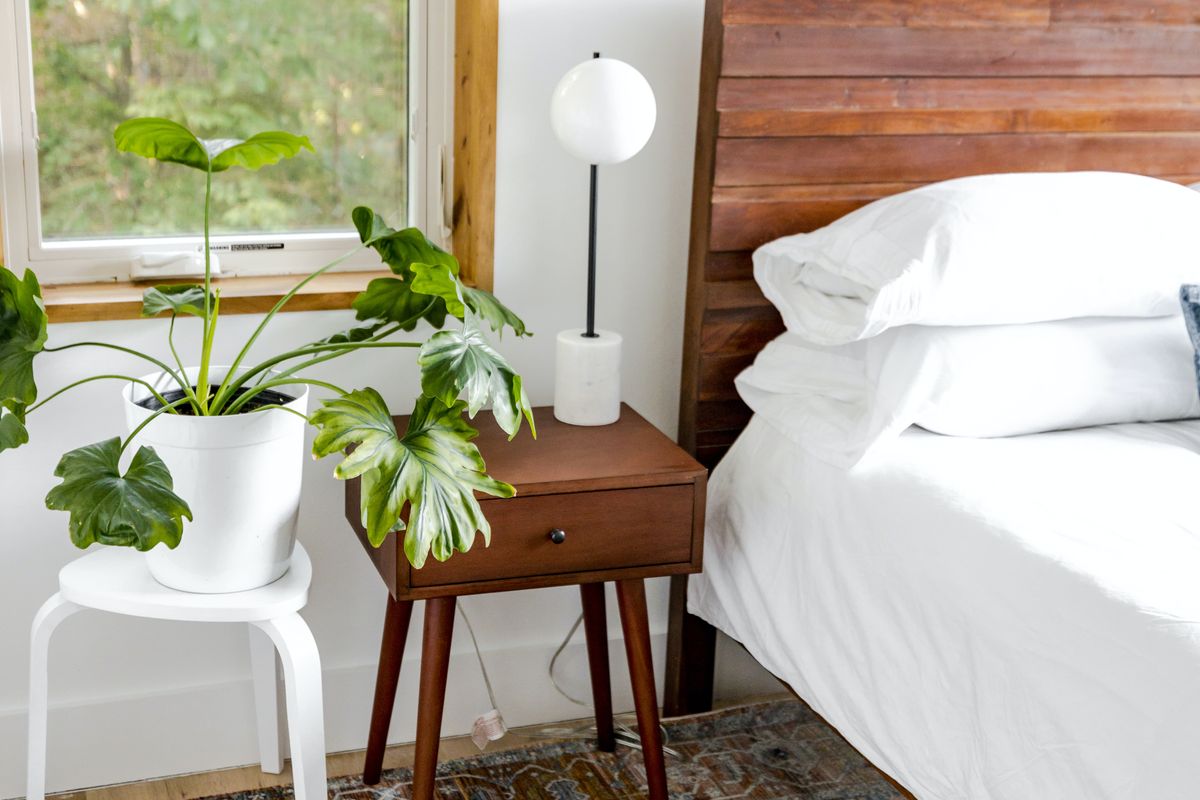
The IKEA EKET cabinet is the wall-pick, and it deletes the nightstand’s biggest cost entirely: the floor. The cabinet measures 35 x 25 x 35 cm (13 3/4 x 9 7/8 x 13 3/4 in), and mounted beside the bed on an EKET suspension rail it holds the lamp-and-phone surface at exactly the height the sleeper needs while leaving the floor below empty for a bin, a chair, or nothing at all. IKEA’s specifications give it a maximum shelf load of 5 kg (11 lb) per level - enough for a lamp, a book stack, and a phone - and the cabinet works equally well floor-standing on optional feet if drilling is not an option. The 25 cm (9 7/8 in) depth is the real headline: it fits bedside gaps that defeat every freestanding piece.
The trade-offs are anchoring and patience. Wall-mounting needs a suspension rail sold separately with the cabinet alone, correct fixings for the wall material, and a hole or two in the plaster - which makes it a poor fit for renters whose leases say otherwise. The 5 kg (11 lb) load limit also means the heavy ceramic lamp stays on a different surface. Mounted properly at mattress height, though, the EKET is the piece that makes a 25 cm (10 in) bedside gap usable, and nothing freestanding comes close at that depth.
Pick 3: IKEA RÅSKOG utility cart
The IKEA RÅSKOG utility cart is the rolling-pick, and it solves the bedside problem from a different angle: instead of shrinking the surface, it adds storage that can leave the room. The cart measures 35 x 45 x 77 cm (13 3/4 x 17 3/4 x 30 3/8 in) on IKEA’s US specification page, with three mesh tiers on lockable castors, a total load capacity of 18 kg (40 lb) and 6 kg (13 lb) per shelf, and a price of $39.99 on IKEA’s US site backed by a 4.6 rating across more than 1,100 reviews. Parked beside the bed it works as a nightstand with drawers that come to you; wheeled into a closet it disappears entirely, which is the feature no cabinet can match.
The trade-off is the top. The mesh shelves hold a lamp base and a book but not a glass of water, and the tallest tier sits at 77 cm (30 3/8 in) - taller than most mattress tops, so the reach geometry needs the lamp arranged with some care. The industrial look divides bedrooms too: against soft textiles it reads as deliberate, against formal furniture it reads as a workshop. For shared rooms, kids’ rooms, and anyone who rearranges often, the cart’s mobility is worth more than the mesh costs.
Side-by-side: the numbers
The three pieces divide the bedside problem cleanly: surface, storage, or mobility. The table collects the specifications as listed by the manufacturers at the time of writing - verify current specs and prices for your market before ordering, since IKEA’s pricing varies by country and the US figures below are the ones I could verify directly.
| IKEA VIHALS bedside table | IKEA EKET cabinet | IKEA RÅSKOG utility cart | |
|---|---|---|---|
| Footprint | 37 x 37 cm (14 5/8 x 14 5/8 in) | 35 x 25 cm (13 3/4 x 9 7/8 in) | 35 x 45 cm (13 3/4 x 17 3/4 in) |
| Floor contact | Full, freestanding | None when wall-mounted | Full, on castors |
| Storage | Compact bedside | One closed cube, 5 kg (11 lb) per shelf | Three open mesh tiers, 18 kg (40 lb) total |
| Installation | Set down | Wall rail, sold separately | Assemble, castors lock |
| Solid surface for a glass | Yes | Yes | No (mesh) |
| Price (US, verified) | Not verified at writing | Not verified at writing | $39.99 |
How much surface you actually need at night
Strip a nightstand to what the night really uses and the list is short: a lamp, a phone, a glass of water, a book, occasionally hand cream or medication. On a 35 cm (14 in) square, the lamp takes one corner, the glass the opposite one, and the book lies flat in the middle - everything else belongs in a drawer, a shelf, or a bin. The habit that breaks small nightstands is accumulation: two days of receipts become a week of clutter becomes a piece that cannot do its job.
The fix is a rule I give clients with compact bedside pieces: the surface resets every morning. Anything that was not used that night moves off - to the EKET’s closed cube, the cart’s lower tier, or out of the room. With that one habit, the narrowest pick on this list covers the nightly essentials comfortably, and the footprint savings never come at the cost of function.
Renters, drill holes, and workarounds
Installation permission decides half of this market. Where drilling is allowed, the IKEA EKET cabinet wins the deepest gaps outright, and correct wall fixings matter more than the cabinet itself - plaster, brick, and drywall each need their own anchors, and IKEA’s instructions say as much. Where it is not allowed, the cart and the freestanding VIHALS both work with zero holes; the EKET can also stand on its optional feet, trading the reclaimed floor for a stable cube at a lower height.
Two renter-friendly refinements round it out. A cart can carry the bedside role in the week and disappear on the weekend, which suits rooms that double as offices or guest spaces. And a tall piece of the wrong height can be corrected by its legs rather than replaced - some bedside gaps want a 55 cm (22 in) surface, others 70 cm (28 in), and measuring the mattress top before shopping prevents the mismatch that makes every reach a stretch.
How to choose
Measure the gap first, in both directions: the floor width beside the mattress and the depth from bed edge to wall. A gap of 38 cm (15 in) or more takes the IKEA VIHALS bedside table with room to spare. A deeper wall but a shallower floor - or a renter’s room where the floor must stay clear - points to the IKEA EKET cabinet, mounted or footed. A room where the bedside storage needs to move, or a shared room where each sleeper’s things differ, is the IKEA RÅSKOG utility cart’s territory, mesh top and all.
Then match the piece to the bedside habits honestly. Heavy clutter wants closed storage, which is the EKET’s cube or nothing. Fluid needs - a guest room tonight, a nursery next year - want wheels. And a room that mostly needs the floor back wants whichever piece claims the least of it. The bed frames that earn their footprint follow the same logic one size up, and once the bedside gap is measured, the dresser positions that protect a walkway complete the room’s floor budget.
The picks
Some links below are affiliate links — we may earn a commission at no extra cost to you.
IKEA VIHALS bedside table
Best for: Bedside gaps of 38 cm or more where the floor is the scarce resource
A 37 x 37 cm square claims roughly half the floor of a conventional nightstand while keeping a freestanding, full-height bedside presence. The trade-off: the small top enforces surface discipline - a lamp, a glass, and a book, not a week of accumulated clutter.
IKEA EKET cabinet
Best for: Very shallow bedside gaps and rooms where the floor must stay clear
At 35 x 25 x 35 cm it fits gaps that defeat every freestanding piece, and wall-mounted on a suspension rail it leaves the floor below entirely empty. The trade-off: wall-mounting needs a separately sold rail and correct anchors, and the 5 kg per-shelf limit rules out heavy lamps.
IKEA RÅSKOG utility cart
Best for: Shared rooms and anyone whose bedside storage needs to move or disappear
Three mesh tiers on lockable castors give the nightstand a drawer system that can wheel into a closet, with an 18 kg total load capacity and a US price of $39.99 backed by a 4.6 rating across 1,100+ reviews. The trade-off: the mesh top holds no glass of water, and the 77 cm height sits above most mattress tops.
Comparison
| Specification | IKEA VIHALS bedside table | IKEA EKET cabinet | IKEA RÅSKOG utility cart |
|---|---|---|---|
| Footprint | 37 x 37 cm (14 5/8 x 14 5/8 in) | 35 x 25 cm (13 3/4 x 9 7/8 in) | 35 x 45 cm (13 3/4 x 17 3/4 in) |
| Floor contact | Full, freestanding | None when wall-mounted | Full, on castors |
| Storage | Compact bedside | One closed cube | Three open mesh tiers |
| Solid surface for a glass | Yes | Yes | No (mesh) |
| Price (US, verified) | Not verified at writing | Not verified at writing | $39.99 |
Sources
- IKEA US product page for RÅSKOG Utility cart, gray-blue ($39.99, 4.6 of 1,136 reviews, 13 3/4x17 3/4x30 3/8 in): https://www.ikea.com/us/en/p/raskog-utility-cart-gray-blue-10586784/
- IKEA product specification pages for EKET cabinet 35x25x35 cm (dimensions, 5 kg max load/shelf, suspension rail requirement): https://www.ikea.com/lv/en/p/eket-cabinet-white-70332124/
- IKEA regional listings for VIHALS bedside table, white, 37x37 cm (dimensions and review record; US price not verifiable at time of writing)
Frequently asked questions
- How narrow can a nightstand be?
- A nightstand can go as narrow as 25-35 cm (10-14 in) deep and still work - the bedside essentials, a lamp, a book, and a phone, fit on a 35 cm square surface. Below about 25 cm the top stops holding a lamp base and a glass at the same time.
- What can I use instead of a nightstand?
- A wall-mounted cabinet frees the floor entirely, a narrow utility cart adds storage while slipping into a gap, and a simple wall shelf next to the bed covers the basics. The right substitute depends on whether you need the floor, the storage, or just the surface.
- Do nightstands need to match the bed?
- No. Nightstands need to match each other's footprint if the bed has two, and the bed's clearance math - not its finish - decides what fits. In tight rooms, mismatched bedside pieces that each earn their spot read better than a matching pair that blocks a walkway.