Layout Planning
Bed Placement Myths That Quietly Waste Space
Four bed placement rules that sound wise but cost you floor, what the old reasoning actually said, and the filter I use before following any placement advice.
By Mara Bennett · Published March 30, 2026 · Updated May 4, 2026
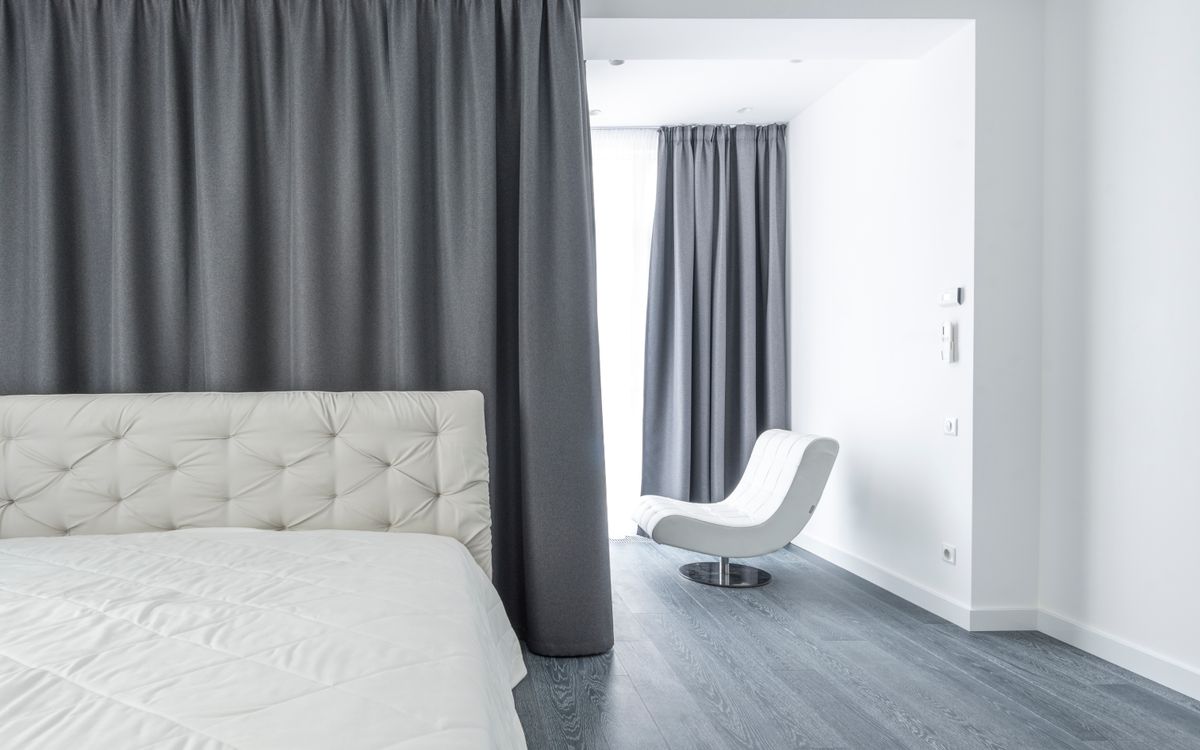
A surprising amount of bed placement advice does not survive contact with a tape measure. Some of it is folk belief wearing the costume of design wisdom, some of it is hotel styling borrowed for rooms it was never meant for, and a fair portion is old knowledge that made sense in drafty houses and stopped making sense anywhere else. The trouble is that the wrong rules are not harmless. In a small room, each one quietly claims floor that you then try to claw back with smaller furniture, tighter walkways, or a dresser that blocks a drawer. I have walked into enough cramped bedrooms to recognize the pattern: the room is not short of space, it is short of options, because a rule nobody questioned fixed the bed in the one spot that wasted the most.
Where these rules came from
Most placement folklore traces back to a handful of practical origins. The classic bed rules from feng shui, for instance, grew out of real environmental logic: a bed should sit where you can see the door, where it is not in line with a draft, and where nothing heavy looms overhead. In a house with a wooden door on leather hinges and no glass in the windows, all three concerns were matters of comfort and safety, not luck.
The symmetry rules came from elsewhere entirely - from staged photography and hotel rooms, where a perfectly centered bed flanked by matching lamps reads as calm in a two-second glance. That is a styling convention. Somewhere along the way it got promoted to a planning law, and now people insist on centering a bed in rooms too narrow to afford the privilege.
Myth 1: the bed can never face the door
The version people repeat is that a bed facing the door is bad luck. The older logic is more useful: the bed should sit where you can see the door, because the person who can see the door sleeps calmer and is never startled by someone walking in. The thing the traditional rule actually discourages is lying directly in line with the door - the so-called dead position - where feet point straight at the entrance.
Translated into floor-plan terms, this is a siting instruction, not a prohibition. A bed angled so its occupant sees the doorway, without lying in the door’s runway, satisfies both the tradition and common sense. What wastes space is the misreading: people who refuse to place a bed on the wall facing the door, and push it against a worse wall instead, then compensate with a walkway so tight they brush the dresser every morning.
Myth 2: both sides need matching nightstands
This one costs the most in small rooms. A matched pair of nightstands implies two open sides, which implies roughly 45 cm (18 in) of clearance on each side of the bed, which implies a wall run of bed width plus 90 cm (35 in). In a room 2.7 m (9 ft) wide, that arithmetic fails immediately - and yet the pair of tables gets bought anyway, each one wedged so close to the wall that its drawer opens 10 cm (4 in) and stops.
The honest version: one usable bedside surface beats two unusable ones. On the wall side, a narrow shelf or nothing at all. On the open side, the one good nightstand, with the lamp on it. If you share the bed and both sides must work, that is the real constraint, and it will push the bed to the best wall - but that is a decision about two people, not a styling obligation.
Myth 3: the bed must sit centered on the wall
Centered beds photograph well. Centered beds also demand the longest clean wall in the room and the most floor around them. When the wall is 242 cm (95 in) or more for a queen with both sides open, centering is the right call - I recommend it often. When the wall is shorter, or interrupted by a door swing or a radiator, centering the bed anyway is how a room ends up with a 35 cm (14 in) squeeze on one side and a nightstand blocking the window.
Off-center placement is not a compromise; it is a deliberate move. Slide the bed toward one corner and the leftover floor concentrates into one wide walkway instead of two thin ones. The asymmetry reads as intentional if the bedding and the light are handled with care - a bed pushed 40 cm (16 in) from the wall with a floor lamp filling the gap looks composed, not cramped.
Myth 4: a bed under a window or a slope is wrong
The window rule has the same shape as the door rule: an old environmental concern - cold, draft, noise - hardened into a superstition. Modern double glazing and layered curtains answer most of the original objection, and a low headboard under a low sill is a solved problem, not a taboo. In rooms where the only clean wall holds the window, the bed-under-window placement is often the option that leaves the best walkway.
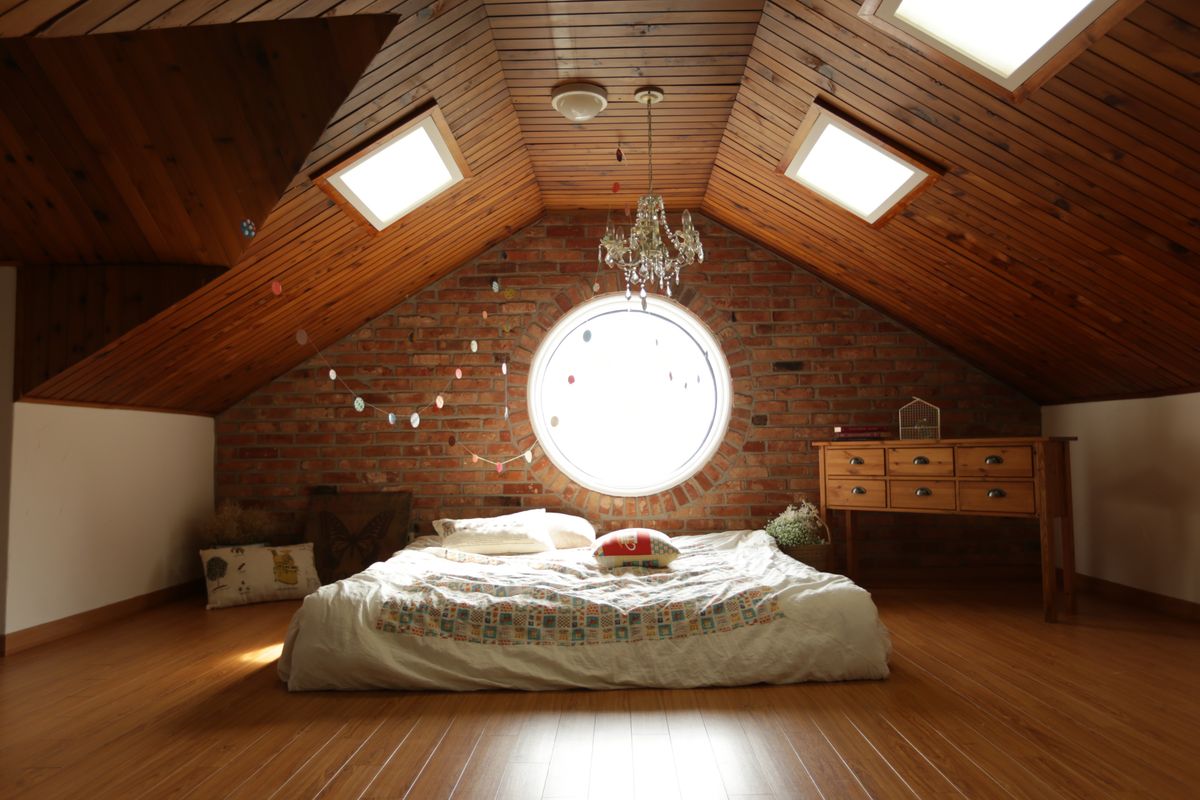
Sloped ceilings and attics catch the same warning. Put the tall parts of the bed - headboard, reading pillows - where the ceiling is high, and let the slope cover the foot or the storage side. I have planned more than one attic where the space under the low slope took the dresser and the bed went where a person could actually sit upright. The rule that matters there is headroom, not placement folklore.
What actually shrinks a room
While these four rules nibble at the bed position, the real space thieves usually go unexamined: a dresser deeper than the walkway can spare, a wardrobe door that sweeps the bed corner, furniture kept “for symmetry” that nobody uses. If a room feels tight, measure the paths first - the numbers that govern clearances take an afternoon to check and often reveal that the bed was never the problem. Then look at what the bed protects or blocks, and let the layout mistakes most people repeat tell you whether something else is eating the floor.
A quick filter for any placement advice
Before following any bed rule, I run it through three questions. First: what physical problem was this rule solving when it was written - draft, cold, interruption, sightline? Second: does my room still have that problem? Third: if I follow the rule, what floor does it cost me, and what do I get back? A rule that answers the first two with “nothing, anymore” and the third with “a walkway” should be retired on the spot.
The rooms that work are not the ones with the most obedient beds. They are the ones where every placement decision can point to a measured clearance, a real sightline, or a real person’s morning routine. Tradition earns its keep when it survives that test - the commanding position does, the matched nightstands mostly do not. Once the bed lands where the evidence points, the three-zone method takes care of the rest of the room in about twenty minutes.
Frequently asked questions
- Is it bad feng shui to have your bed facing the door?
- The traditional commanding position actually favors a bed where you can see the door from the bed, not one that hides it. What most rule-of-thumb advice bans is lying in line with the door, and even that comes from draft and interruption concerns rather than anything about floor space.
- Does a bed have to be centered on the wall?
- No. Centering is a styling habit, not a planning rule. In a small room, pushing the bed off-center to protect a walkway or make room for a full dresser clearance usually buys more usable space than perfect symmetry ever returns.
- Do you need two nightstands in a bedroom?
- Only if two people actually use both sides. One bedside surface plus a wall shelf or a floor lamp on the far side covers most single sleepers and frees a full furniture footprint in rooms under about 3 m wide.