Color & Texture
The Best Bedroom Rugs, Sorted by Size
Three bedroom rugs picked by bed size - a big low-pile anchor for king and queen rooms, a plush mid-size, and a washable flatweave for small rooms and tight budgets.
By Mara Bennett · Published October 1, 2026 · Updated October 1, 2026
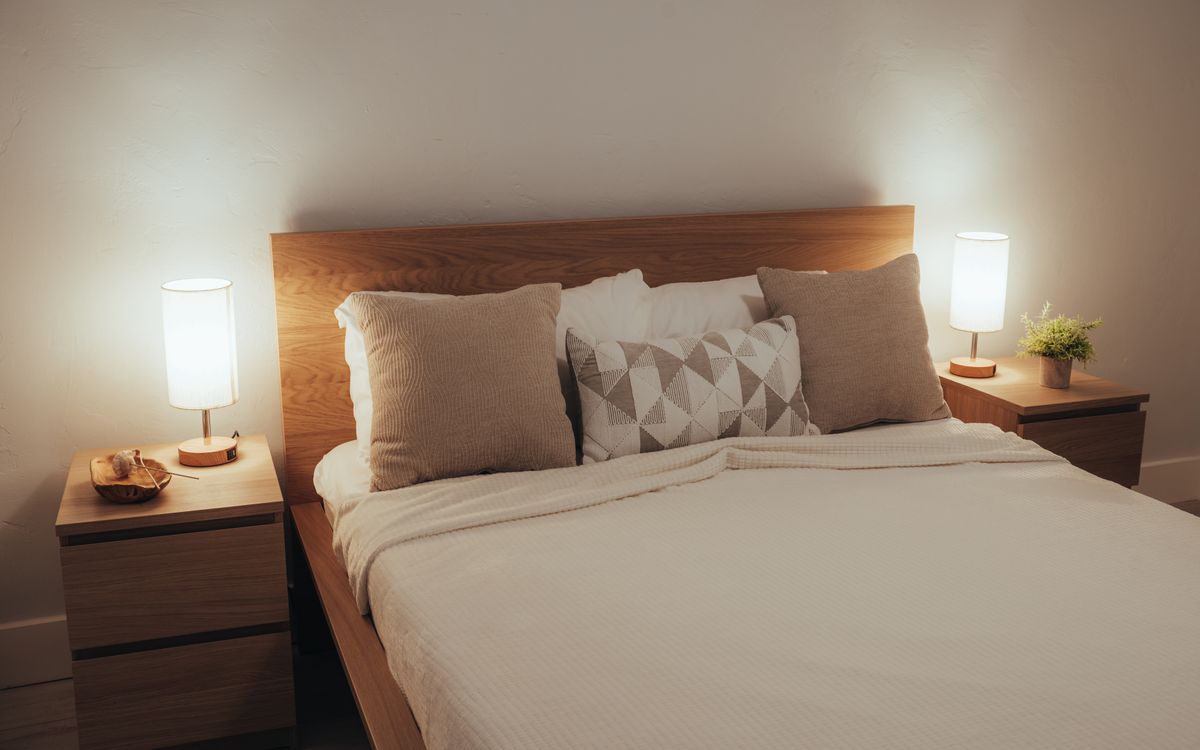
Most bedroom rug buying starts in the wrong place: people fall for a pattern, then try to make the bed negotiate with it. It should run the other way. The bed is fixed, the room’s traffic is fixed, and the rug has to fit both - which means the bed size and the room’s free floor decide the rug before aesthetics get a vote. So instead of one “best rug,” this page gives three, each tied to a bed-and-room size, each with the trade-offs stated, and every spec checked against the maker’s product pages.
What the rug size actually has to cover
A bedroom rug is measured against three things: the bed’s footprint, the border you want visible around it, and the clearances it must not eat. The border is the part doing the work - 45-60 cm (18-24 in) of rug showing on each usable side of the bed and past the foot. Too little border and the rug reads as a remnant; too much and it swallows the room.
Then there is the traffic question. Any rug that sits under a door swing or in a drawer path wants low pile or flatweave; any rug that lives in open floor beside the bed can go as plush as you like. Size and pile are not separate decisions, and every pick below is a specific answer to both. For the full placement math behind these sizes, the bedroom rug size and placement guide walks through the two arrangements - three-sides landing and two-thirds tuck - that these picks are sized for.
How I picked these three
I filtered for three things. First, sizes that match real bed-and-room combinations rather than one hero size. Second, a maker’s page with plain specifications - pile type, material, care, underlay requirements - so the claims here can be checked, not guessed. Third, price levels that make sense for each room size: nobody needs a $250 rug in a room that fits a $30 one, and nobody should put a $30 flatweave where their bare feet land every morning expecting plush.
No rug was slept on for a month and I will not pretend one was; what follows comes from the makers’ specification pages and from placing these products across real projects. All three are IKEA, again not as a loyalty statement but because their spec pages are the ones that state pile, material, and care in plain language at prices worth reporting.
The three picks at a glance
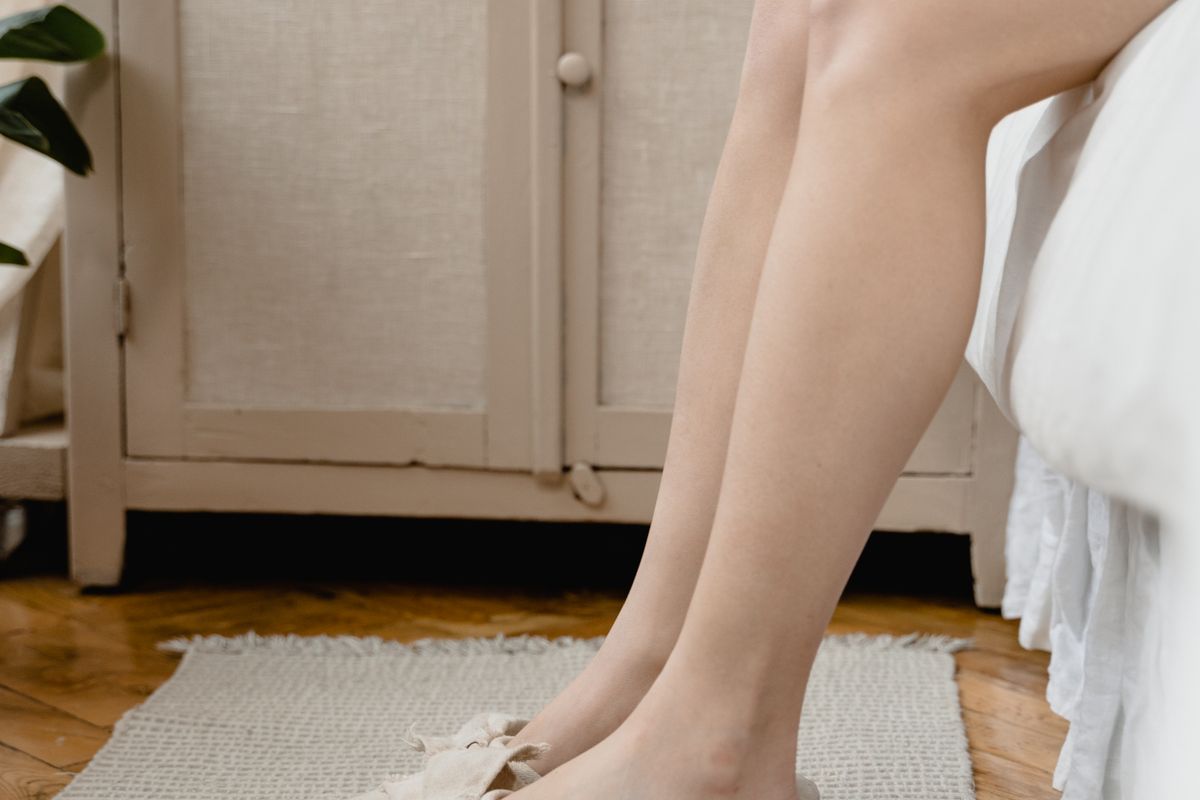
- IKEA STOENSE rug, low pile, off-white - the big anchor for king and queen rooms, at 7’10”x10’.
- IKEA ÄRENDE rug, high pile, off-white - the plush mid-size for full and smaller queen rooms, at 5’3”x7’7”.
- IKEA TIPHEDE rug, flatwoven, black/natural - the washable, budget answer for small rooms, at 5’1”x7’3”.
Pick 1: IKEA STOENSE rug, low pile, off-white
The IKEA STOENSE rug, low pile, off-white is the pick for king and queen rooms that can take a full 8x10-zone rug, and it is the one I reach for when a large bedroom needs its anchor without losing its walkway.
The size that earns its place here is 240x300 cm (7’10”x10’): under a 193 cm (76 in) king it leaves a genuine three-sided border, and under a queen it is generous to the point of luxury. The low pile is the reason it can be that big - a rug this size in high pile would fight every door and drawer in the room, while a low pile this dense stays passable under a door swing and easy to vacuum. The off-white tone with a subtle sheen carries warmth into a cool palette and calm into a warm one, which is a large rug’s most important job: it must get along with everything.
At the time of writing this size lists at $249.99, with a customer rating of 4.6 across more than 6,000 reviews on the US site - the longest track record of the three picks.
Best for: king and queen rooms with wall runs that can absorb a 240x300 cm (7’10”x10’) footprint.
The trade-off: it is the expensive one, and low pile is comfortable rather than plush - feet land on firm softness, not a cloud.
Pick 2: IKEA ÄRENDE rug, high pile, off-white
The IKEA ÄRENDE rug, high pile, off-white is the pick for full and smaller queen rooms, and for anyone whose priority list starts with what 7 a.m. feels like.
The 160x230 cm (5’3”x7’7”) size is the workhorse of the two-thirds tuck: under a full bed it frames all three working sides, and under a queen it gives the honest tuck arrangement rather than a cramped compromise. The high pile is genuinely deep - this is the rug that changes barefoot mornings - and the maker’s page also lists it in a 3’11”x5’11” size and a gray colorway, so the same feel scales down to smaller sleeping corners. Deep pile dampens sound, which rooms with hard floors quietly benefit from.
At the time of writing the 5’3”x7’7” size lists at $69.99, with a rating of 4.3 across about 270 reviews on the US site - the best price-to-plush ratio here by a wide margin.
Best for: full and compact queen bedrooms, studio sleeping corners, and bedside zones where plush matters more than coverage.
The trade-off: high pile needs open floor - it is the wrong rug under a door swing or a drawer path - and deep pile holds dust, so it wants a proper vacuum habit.
Pick 3: IKEA TIPHEDE rug, flatwoven, black/natural
The IKEA TIPHEDE rug, flatwoven, black/natural is the pick for small rooms, twin beds, and any situation where the rug’s real job is practical rather than plush.
It is a flatwoven cotton rug, 155x220 cm (5’1”x7’3”) in the size that matters here, made from cotton surplus in the maker’s own description - a low-waste material story that happens to be true and relevant. Flatweave is 2 mm thin, which is exactly why it wins its niche: it passes under door swings and drawer paths that stop every other rug, it is light enough to shake out and move for cleaning, and it is machine washable - the page specifies a warm wash with up to 10% shrinkage and line drying, so plan the size with that margin. The maker explicitly requires an anti-slip underlay beneath it for safe use, which is honest of them; thin rugs on hard floors slide without one.
At the time of writing this size lists at $29.99, with a rating of 4.3 across more than 2,000 reviews on the US site.
Best for: small bedrooms, twin rooms, kid rooms, and renter-friendly setups where washability and a thin profile beat pile depth.
The trade-off: there is no plushness at all - feet land on flat cotton - and the thin weave shows the floor through nothing but its own pattern, so it reads casual rather than finished.
Side-by-side specifications
Specifications below come from the makers’ product pages at the time of writing; verify current specs before ordering.
Exact pile heights, materials, and the size each rug is cut to are laid out in the comparison table that follows the pick cards at the end of this page.
Pairing the rug with the bed placement
The pick only works if the placement does. Three pairings cover most rooms:
Three-sides landing, king or queen: the STOENSE at 240x300 cm (7’10”x10’), centered under the bed, nightstands fully off the rug. This is the calm, complete version and it needs about 330 cm (130 in) of clean wall.
Two-thirds tuck, full or queen: the ÄRENDE at 160x230 cm (5’3”x7’7”) starting under the lower two-thirds of the bed. Plush lands exactly where feet land, and the head of the room stays open.
Small room or twin: the TIPHEDE at 155x220 cm (5’1”x7’3”) tucked under the lower two-thirds, or cut back to the bedside-only arrangement with the 80x150 cm (2’7”x4’11”) size of the same rug as a runner.
Whatever the arrangement, the rug never enters the door arc, and drawers get their swing back before the rug gets its border. If the room’s width is in question, the guide to planning walkways and clearance gives every number the check needs.
Care and the underlay question
Two habits keep any of these rugs good for years, and both are boring on purpose. First, the underlay: on hard floors, every rug here wants one, and the TIPHEDE requires it - an anti-slip sheet sized just smaller than the rug stops the sliding and the corner flips that make thin rugs miserable. Second, rotation: bedrooms wear rugs asymmetrically, because traffic runs from the door to one side of the bed, so a quarter-turn twice a year evens out the paths. Vacuum the STOENSE and ÄRENDE regularly with the beater bar off or low, since deep and dense piles pull; shake out and wash the TIPHEDE on the schedule the page allows, stretching it back to shape after the wash because cotton shrinks.
If your window treatment and palette are already settled, the rug is usually the last big textile a bedroom needs - and the one that ties the layered bedding textures on the bed to the floor beneath them.
The picks
Some links below are affiliate links — we may earn a commission at no extra cost to you.
IKEA STOENSE rug, low pile, off-white
Best for: King and queen rooms that fit a 240x300 cm (7'10"x10') anchor
A dense low-pile rug big enough for a genuine three-sided border under a king, with the pile staying low enough to pass under door swings and drawer paths. Long track record - 4.6 across 6,000+ US reviews. The trade-off: it is the expensive pick, and low pile is comfortable rather than plush.
IKEA ÄRENDE rug, high pile, off-white
Best for: Full and compact queen bedrooms, in a two-thirds tuck
Deep high pile at 160x230 cm (5'3"x7'7") puts plush exactly where feet land and dampens sound on hard floors, at the best price-to-plush ratio of the three. The trade-off: high pile needs open floor - it fails under door swings and drawer paths - and deep pile wants a regular vacuum habit.
IKEA TIPHEDE rug, flatwoven, black/natural
Best for: Small rooms, twin beds, and washability-first households
A 2 mm flatwoven cotton rug that passes under doors and drawers, machine washable per the maker with up to 10% shrinkage to plan for, at $29.99. An anti-slip underlay is explicitly required. The trade-off: zero plushness, and the flat look reads casual rather than finished.
Comparison
| Specification | IKEA STOENSE rug, low pile, off-white | IKEA ÄRENDE rug, high pile, off-white | IKEA TIPHEDE rug, flatwoven, black/natural |
|---|---|---|---|
| Pile type | Low pile | High pile | Flatwoven, 2 mm |
| Size covered here | 240x300 cm (7'10"x10') | 160x230 cm (5'3"x7'7") | 155x220 cm (5'1"x7'3") |
| Material | Polyester | Polyester | 100% cotton |
| Machine washable | No | No | Yes, warm wash, line dry |
| Price at time of writing | $249.99 | $69.99 | $29.99 |
Sources
- IKEA US product listings for STOENSE, ÄRENDE, and TIPHEDE (ikea.com/us/en, accessed at time of writing)
- IKEA TIPHEDE product page: 100% cotton, wash care with 10% shrinkage note, and mandatory anti-slip underlay requirement
- IKEA ÄRENDE and STOENSE product listings: pile type, sizes, and prices
Frequently asked questions
- What size rug do I need for a king or queen bed?
- A 240x300 cm (7'10"x10') rug frames a king bed on three sides with a full border, and works for a queen too. In tighter rooms, a 160x230 cm (5'3"x7'7") rug placed under the lower two-thirds of the bed is the standard fallback.
- Is high pile or low pile better for a bedroom rug?
- High pile feels better underfoot, which makes it the natural bedside choice when the rug has open clearance. Low pile and flatweave are better wherever the rug sits under a door swing, under drawers, or in a narrow walkway.
- Do bedroom rugs need an anti-slip underlay?
- Yes on hard floors - rugs slide, corners flip, and the maker of the flatweave pick below explicitly requires an anti-slip underlay for safe use. Thin rugs benefit most because they have too little weight to hold themselves down.