Small Spaces
The Tiny Bedroom Storage Playbook
Storage for bedrooms where the floor is already spoken for - vertical moves, borrowed space, and hidden capacity, ordered by how much they actually hold.
By Mara Bennett · Published June 30, 2026 · Updated June 30, 2026
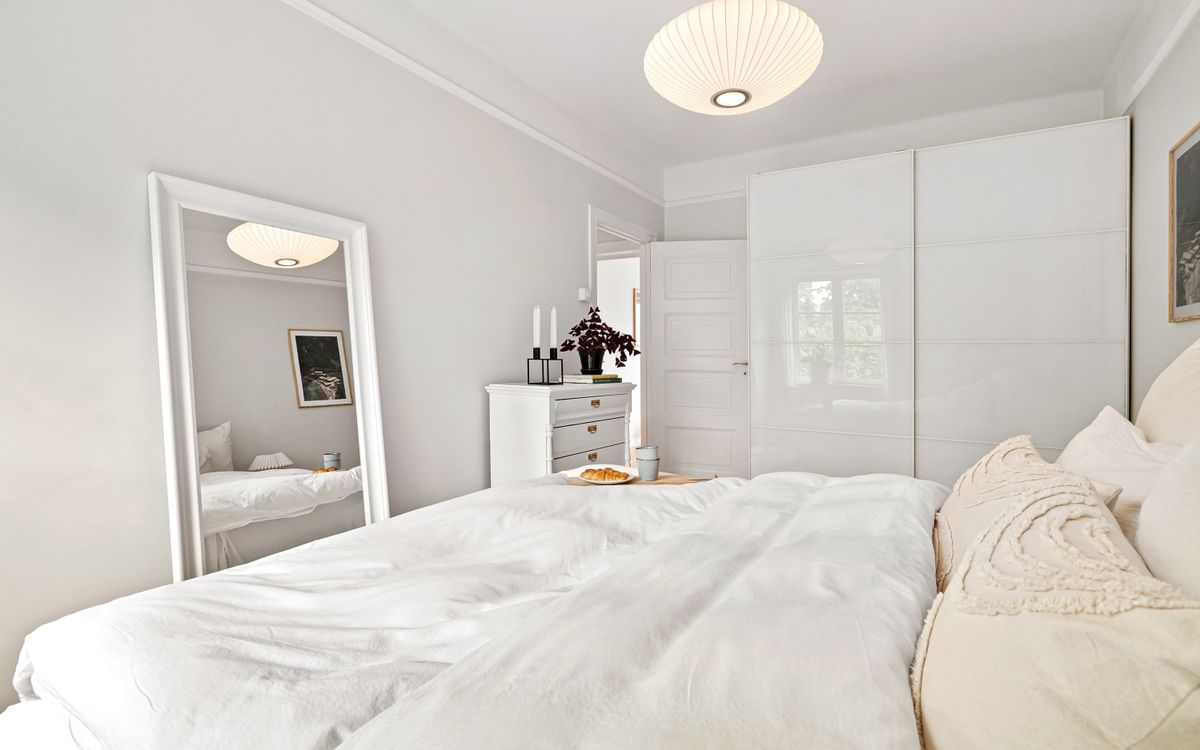
Every tiny bedroom I have worked on had the same moment: the floor is fully allocated, the wardrobe is already overstuffed, and the client asks where the rest of the things are supposed to go. The answer is almost always the same three layers, applied in order - vertical, borrowed, hidden - and almost never the first instinct, which is to buy another piece of furniture and park it in what little walking room remains. This playbook is that sequence, written as I apply it, with the capacity numbers that tell you which move is worth doing.
Audit before you add
One afternoon of sorting changes what storage you actually need. Take everything out of one category - say, clothes - and sort into three piles: used weekly, used monthly or seasonally, and not used in a year. In most rooms, the third pile is a third of the volume, and it is occupying prime storage real estate.
The weekly pile earns the easiest-access space: eye level, front of drawers, one-motion reach. The monthly pile goes to medium-access zones: under the bed, upper shelves. The yearly pile leaves the room or goes to the least accessible spot that exists - the top of the wardrobe, a high shelf, a box under the guest bed elsewhere in the home. This sorting is the cheapest square metres of storage you will ever find, and it costs nothing.
Layer 1: go vertical
Walls are the unclaimed land in most bedrooms, and the vertical layer starts at the floor and goes up:
- Tall, not wide. A 60 cm (24 in) wide bookcase run floor-to-ceiling holds more than a wide low one and takes a fraction of the floor. Anchor tall pieces to the wall.
- Above the door. The wall above the doorframe is dead space in every bedroom I have measured. One shelf across it holds spare bedding, off-season shoes, luggage.
- Over-door organisers. A pocket rack on the back of the door takes shoes, accessories, scarves - twenty items in a footprint of zero. The back of the wardrobe door works too.
- Wall hooks and rails. A row of hooks behind the door or beside the wardrobe handles tomorrow’s outfit and the daily bag. Keep hooks out of the bed’s immediate sightline; visible clutter is visual noise at bedtime.
- Shelving above furniture. The wall zone above the dresser and above the headboard takes floating shelves. Above the headboard, keep it shallow and secure - nothing heavy over a sleeping face.
The vertical layer’s advantage is that none of it needs floor. Its limit is reach: above roughly 180 cm (71 in), everything stored should be monthly-or-rarer by design.
Layer 2: borrow space you already own
Borrowed space is storage inside zones that are otherwise doing nothing:
- Under the bed. The largest single borrow. Measure your clearance first: a standard frame on legs gives 15-25 cm (6-10 in), which fits low-profile rolling bins; a platform frame with 30 cm (12 in) or more takes standard bins. Vacuum bags compress seasonal duvets and coats to half their bulk. Choose between drawer beds, lift-up frames, and rolling bins by opening space rather than capacity claims - a bin you cannot pull out fully is not storage.
- Behind the door. The arc a door sweeps is dead floor for furniture but live air for a hook, an over-door rail, or a slim leaning ladder rack for towels and blankets.
- The wardrobe’s top shelf. Most wardrobes have 30-50 cm (12-20 in) of unused depth at the top. Shelf dividers and labelled bins turn it into the seasonal zone the audit identified.
- The sides of the wardrobe. A 10-15 cm (4-6 in) gap between wardrobe and wall takes a slim rolling cart - spices-style narrow, sized for belts, tights, chargers.
Layer 3: hide storage inside furniture you already need
The hidden layer is furniture that does two jobs, and it is where a tiny bedroom’s budget should go when you do buy something:
- A bed with drawers or a lift-up deck - the biggest single hidden capacity in the room, and the pick that changes everything else downstream.
- A storage bench or ottoman at the foot of the bed, but only if the foot lane has the spare 45 cm (18 in) of depth; in the tightest rooms this is a luxury, not a need.
- A nightstand with drawers instead of open legs - two of them across a bed adds a deep drawer per side.
- A headboard with shelves or cubbies for the books and the water glass that otherwise colonise the nightstand top.
- Mirrored or lidded pieces where the surface itself is the function: a mirror-fronted cabinet, a bench with a hinged lid.
The discipline that keeps the hidden layer honest: a piece that stores nothing visibly must stay closed. Open-bin furniture in a small room reads as permanent mess; lids and doors are what make hidden storage look like calm.
What not to buy
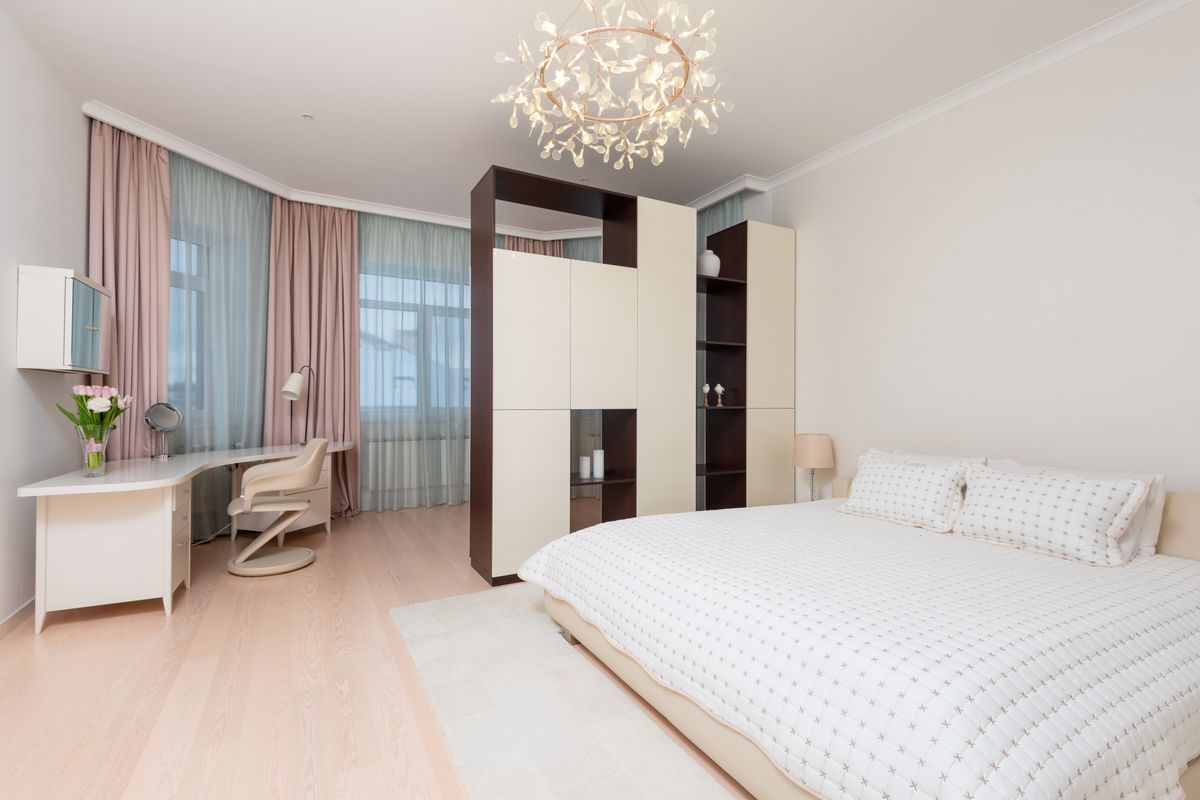
The playbook has a negative list, because the wrong purchase eats the floor the right ones would have freed:
- Wide dressers. Anything deeper than 55 cm (22 in) is a hallway obstacle in a tiny room; a second slim dresser beats one deep one.
- Storage that duplicates. A shoe rack plus over-door shoe pockets plus shoe boxes under the bed means shoes won. One system, the best one, wins.
- Furniture bought before the audit. Half the dressers people buy for tiny bedrooms are filled with the third pile from the audit - things that should have left the room instead.
- Anything that blocks a window or a radiator. Storage against glass grows mould; storage over a radiator ruins what you store. Both are losses dressed as gains.
The order of operations
When applying all of this, sequence matters more than ambition:
- Audit and remove the yearly pile.
- Build the vertical layer - it is cheap, fast, and reversible.
- Borrow the under-bed and behind-door zones with measured bins.
- Only then consider a purchase, and let it be a hidden-capacity piece.
- Label everything that lives above eye level or under the bed - unlabelled seasonal storage becomes mystery storage within a year.
The payoff of the full sequence is not just capacity. A tiny bedroom where everything has an address resets itself nightly in ten minutes, and that reset is what makes small rooms liveable - far more than any square metre you could add. If the room itself needs re-planning rather than re-storing, start with the layouts rather than the storage: the four layouts for a 10x10 room and the loft bed basics both recover floor before a single bin is bought.
Frequently asked questions
- How do you add storage to a small bedroom?
- Work the three layers in order: vertical (walls, over-door, above-furniture), borrowed (under-bed, behind-the-door, the top of the wardrobe), and hidden (storage built into furniture you already need, like a bed with drawers or a bench with a lid). Floor-footprint storage is the last resort, not the first.
- Is it better to have a dresser or a wardrobe in a small bedroom?
- Usually a dresser. A 45-50 cm (18-20 in) deep, 100-120 cm (39-47 in) wide dresser holds folded clothes for one person and needs only drawer-pull clearance. A wardrobe needs 60 cm (24 in) of depth plus door swing, but it is the only answer for clothes that hang.
- What should you not store in a tiny bedroom?
- Anything seasonal or duplicated. Out-of-season clothing, spare bedding you never rotate, and keepsakes that are emotional rather than daily belong in under-bed boxes at most, or outside the room entirely. A tiny bedroom works when nearly everything in it is used weekly.