Guides
Moving In: Your First-Week Bedroom Setup Plan
A day-by-day first-week plan for a new bedroom - what to set up on night one, what can wait, and the order that keeps the room calm while boxes remain.
By Mara Bennett · Published September 30, 2026 · Updated September 30, 2026
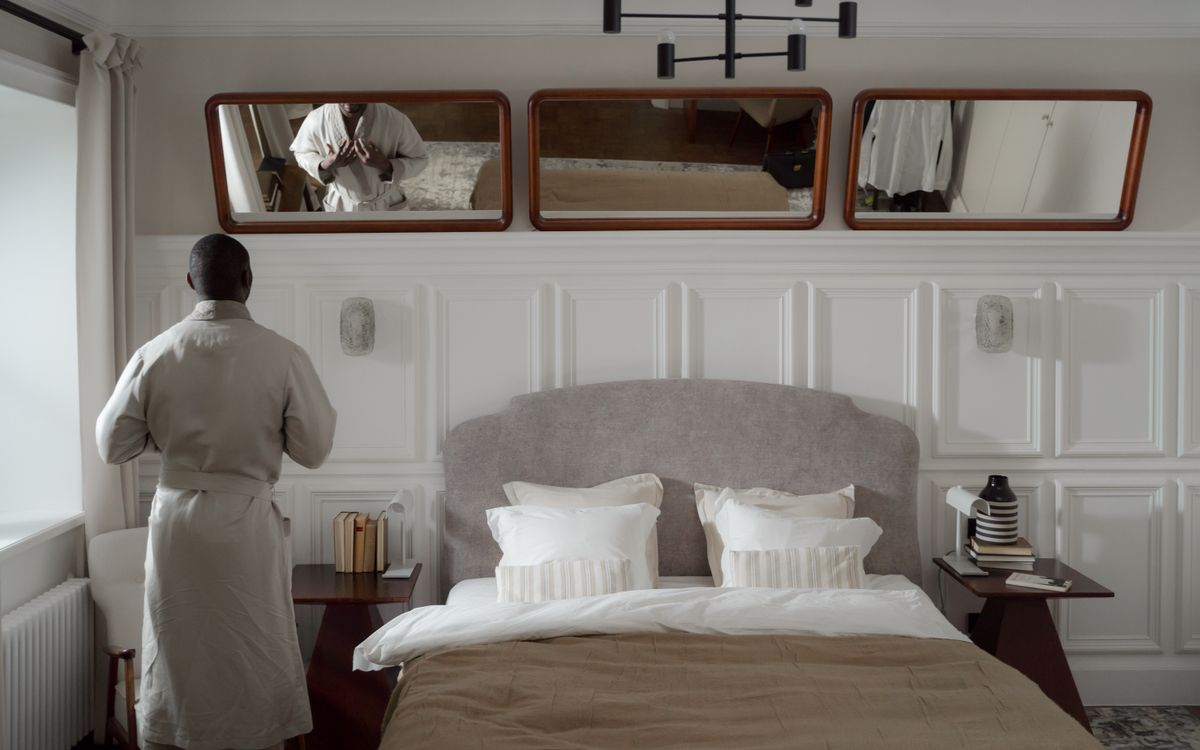
The first week in a new bedroom sets its habits. Where the bed lands on day two is usually where it stays for years, which boxes get opened first decides what the room can do, and the shortcuts taken while exhausted become the clutter you trip over for a year. So I treat the first week as a sequence, not a blitz - a fixed order of setups that gets the room sleeping and working before it gets styled.
The priority order I follow
The sequence is short: sleep surface, clearance, light, clothes, and only then decor. Each step unlocks the next. The bed has to be placed before anything else because it is the largest object and every other measurement bends around it. Light and privacy come before clothes because bad sleep poisons everything else the week is trying to achieve. Clothes come before decor because a working morning routine is the difference between the room serving you and you serving the boxes.
What the order prevents is the most common first-week mistake: unpacking decor boxes while the mattress is still leaning against a wall. People assemble what is easiest, not what matters, and the easy things eat the evening.
Night one: sleepable, nothing else
The first night has one job: sleep, at whatever level of improvisation the moving-day reality allows. The mattress goes on the floor or on an unassembled frame, bedding comes out of the box marked bedding, and one lamp gets positioned so nobody stumbles in the dark. That is the entire assignment.
I say this plainly because moving-day exhaustion makes people skip even this, and then the first night is spent hunting a phone charger inside a trash bag. Two things go in a fixed spot before anything else: the lamp and the charging cable. Everything else in the room can be in chaos for twenty-four hours without cost.
Days two and three: the bed gets its final position
This is the decision the whole week bends around, and it deserves a clear hour, not a tired fifteen minutes. The bed frame gets assembled and the mattress goes on it - in the position I intend it to stay. To choose that position, I walk the room with the door swinging fully open, note the window, and place the bed against the longest clean wall, keeping at least 45 cm (18 in) on each usable side. The walkway and clearance numbers that make a room work start here, and the measure sheet settles any doubt about whether the wall can hold the bed plus its sides.
Two habits matter more than the exact wall. First, commit - a bed tested “temporarily” on the wrong wall for a week tends to stay there until spring. Second, leave the nightstand positions empty until the mornings have happened; the right spot for a lamp reveals itself faster than you would think.
Day four: light and privacy
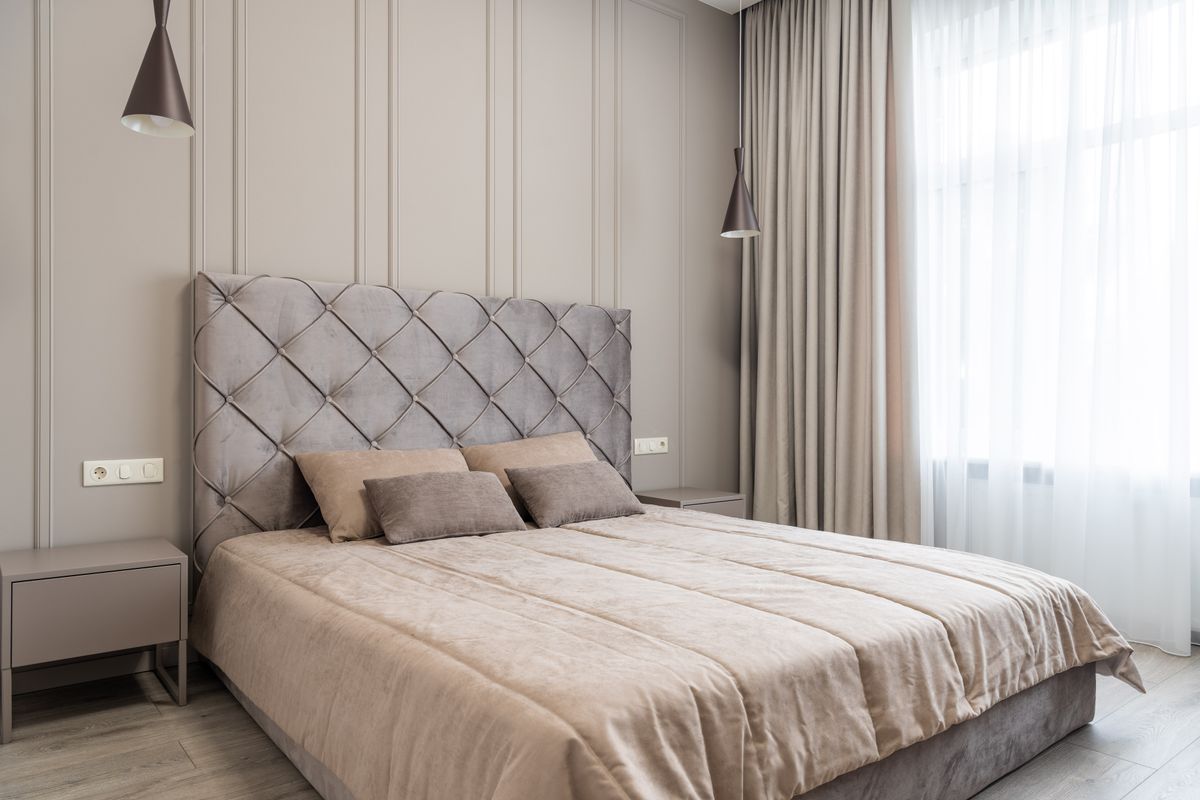
Before the first full night on the placed bed, the room needs control of its own darkness. Bare new-apartment windows glow with streetlights and wake with sunrise, and both end sleep quietly. Curtains or a blackout blind go up on day four, and renters can usually do this without drilling, since tension rods and no-hole brackets cover most window frames.
The same day, the room gets its working light: one lamp per bedside or a single floor lamp within reach of the bed, warm-toned, switched where a half-asleep hand can find it. Overhead light stays off from now on. The aim is a room that gets dark when you want it dark and glows when you want it warm, and that costs one curtain rod and one or two lamps - not a lighting project.
Day five: one working clothes system
The first week does not need a perfect wardrobe; it needs one clothes system that functions by Tuesday. That means the daily rotation - roughly a week of clothes - hanging or folded somewhere reachable, a home for the worn-once pile, and a laundry bag with an actual location. A cheap rail or a single dresser suffices; the full closet build-out can take weeks.
The test is simple. If mornings involve digging through an open suitcase, the system does not work yet. If you can get dressed without excavating, it works, whatever it looks like. Refinement comes later; function comes now. The system also earns its keep twice, because a working clothes routine keeps the floor clear, which keeps the clearance numbers from the earlier steps intact - and a floor that stays clear is the quiet difference between a room that works and one that drifts back into moving-day disorder.
The weekend: only now decor
With sleep working, light controlled, and mornings running, the weekend gets the decorative pass - and it should be deliberately small. Art on the wall you see from the bed, a rug if the floor is bare, one or two objects that make the room feel owned. What I do not do is fill the room to a finished state in week one. A new room has not yet told you where it wants things: which corner gathers clutter, where the morning sun lands, whether the chair by the window will ever be sat in.
That knowledge takes weeks, and the room-to-finished timeline gives it room to arrive. If the itch to decorate hard is strong, write the ideas down for the second weekend instead of acting on them now - a list of wants is useful; a room styled by a tired person on day six is usually half undone within a month.
A one-hour end-of-week check
Sunday evening, one hour, five questions. Does the door open fully against nothing? Is there a real walkway on every side of the bed anyone uses? Does the room go fully dark on demand? Can you get dressed without excavation? Does every object you touch nightly have a fixed spot?
Any answer of no points to the week two agenda, and it will be a short list if the sequence was followed. A bedroom does not need to be finished in a week - it needs to be correct in its bones. Sleep, clearance, light, clothes; decor waits for the room to ask. Rooms built this way stay calm long after the boxes are gone.
Frequently asked questions
- How do you set up a bedroom when the mattress has not arrived yet?
- Set up everything that does not depend on it: bed frame placement, walkway widths, the lamp and the curtain track. Sleep on the floor mattress if you have one, and treat the first few nights as a test of the layout you have planned.
- What furniture should you assemble first after moving in?
- The bed, then the blackout or curtains, then whatever stores clothes. The bed first because its position anchors every other measurement, and light and clothes next because they decide whether nights and mornings work at all.
- When should you decorate a new bedroom?
- Not in the first week. Decor buys should wait until you have slept in the room long enough to know where light lands and where clutter collects, which usually means the second or third weekend.