Lighting & Ambience
Blackout and Sheer: Layering Bedroom Curtains
How a sheer layer and a blackout layer on one window solve privacy, morning light, and street glare - with track and rod hanging details that matter.
By Mara Bennett · Published June 17, 2026 · Updated July 8, 2026
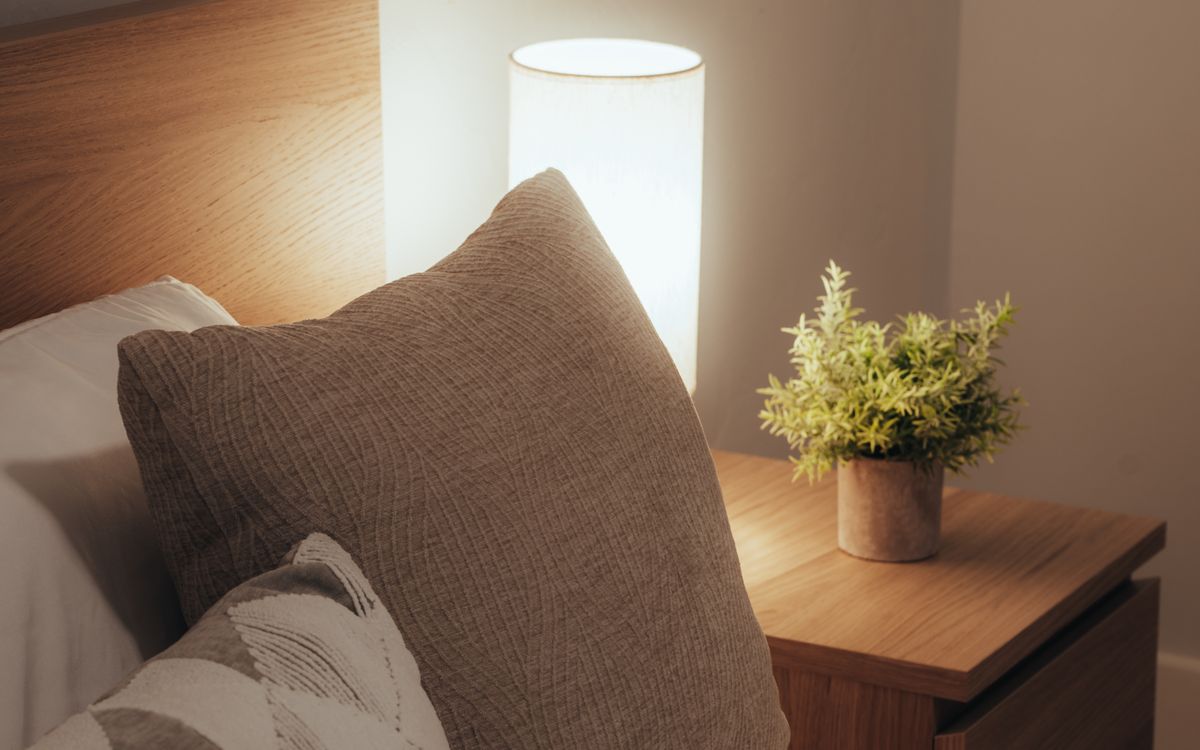
A window in a bedroom is asked to do opposite things: give you daylight and privacy during the day, then go completely dark and quiet at night. No single curtain does both. The sheer filters and softens but lets streetlight and sunrise straight through; the blackout darkens the room but turns the window into a heavy closed wall the moment you hang it. The solution is the oldest one in the toolkit - hang both, on separate rails, and use each for what it does well. Once you have lived with a properly layered window, a single-panel window reads as unfinished.
Why a single curtain fails both jobs
Every curtain buys some combination of light control, privacy, and weight, and choosing one means choosing what you give up. A blackout panel alone solves the night and loses the day: when it is open for morning light, the room loses all privacy, and the fabric itself is thick enough to look like furniture you cannot sit on. A sheer alone solves the day and loses the night: it diffuses glare beautifully, but a lit room at dusk becomes a display case to the street, and morning arrives whether you want it or not.
What changed my mind about layering on every project was noticing how many hours a bedroom window spends in the middle states - open with light, closed with privacy, half-drawn for napping. Those in-between hours are exactly where the two-layer setup earns its cost.
How the double rod and double track work
The hardware is simple: two rails, one in front of the other, mounted from the same brackets or the same ceiling track. The sheer hangs on the inner rail, closest to the glass; the blackout hangs on the outer rail, closer to the room. Each layer slides independently, which is the entire point - the combinations are what make the system useful.
Four working states cover the whole day: sheers alone for filtered daylight with privacy; blackout alone for full dark; both closed for the deepest night; both open for a completely clear window. I run this as a double curtain track wherever possible, because tracks glide more smoothly under weight and ceiling-mounted tracks let the panels hang past the frame on both sides. Double rods are the renter-friendly version and work nearly as well, provided the brackets stand the front rail far enough off the wall that the blackout fabric does not catch on the sheer rail behind it.
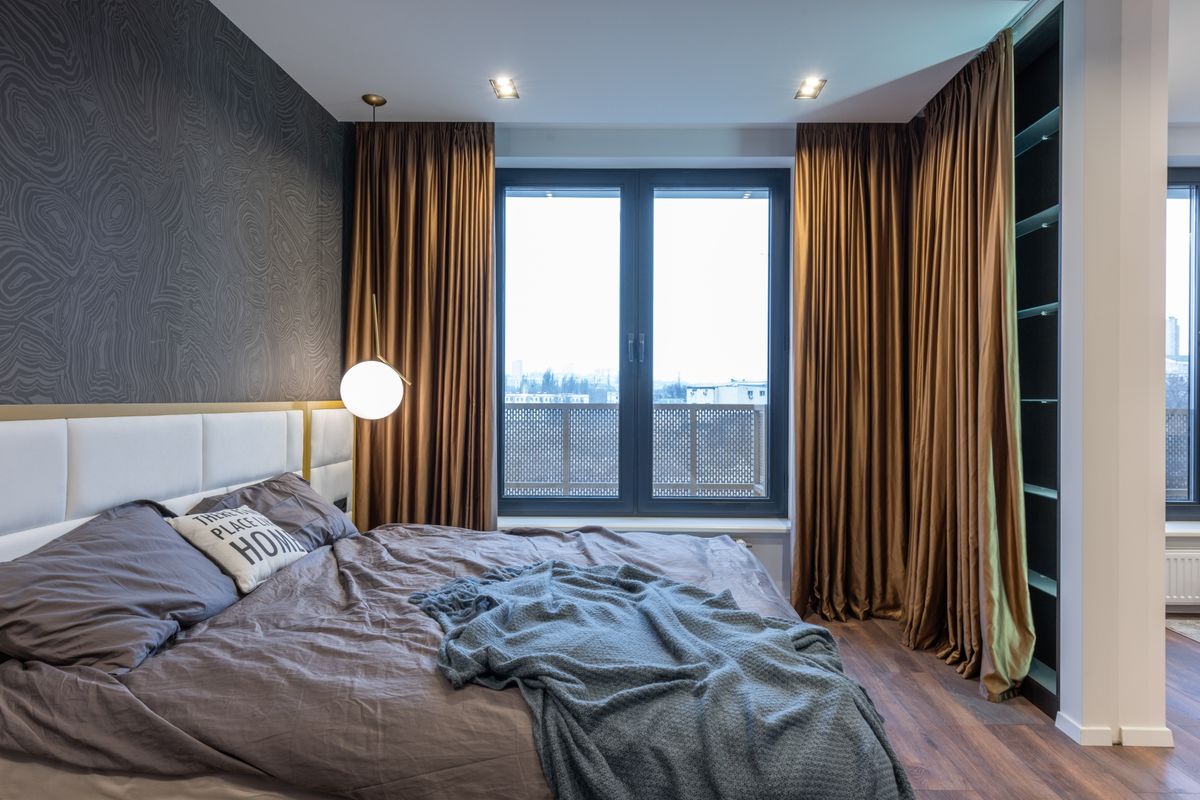
Choosing the blackout layer
Judge blackout fabric by three things, and only one of them is the fabric itself. First, the label: true blackout fabrics are rated for how much light they block, and a genuine blackout panel blocks effectively all of it - if a product claims only “room darkening” instead of blackout, expect a dim glow rather than darkness, which may suit a guest room but not a light-sensitive sleeper.
Second, and more important than fabric grade: the hanging geometry. Light leaks around edges, not through fabric. A closed blackout panel that stops exactly at the window frame leaves a bright halo on each side, and a top gap projects a strip of light across the ceiling at dawn. The panel should overlap the window opening on all four sides - my rule of thumb is extending at least 15 cm (5.9 in) past each side and hanging the rail high enough that the fabric runs to the sill or floor.
Third, the color of the facing matters less than people expect, since the working surface is the backing layer, but a lighter face color keeps the room from feeling draped in heavy darkness during the daytime hours when the blackout sits open at the sides.
Choosing the sheer layer
Sheers carry three jobs: they diffuse harsh sun into even daylight, they give daytime privacy, and they keep the window from reading as a bare hole in the wall when everything is open. A good sheer for a bedroom is generously wide - fabric gathered at two to three times the track width hangs in soft folds rather than a stretched flat sheet - and long enough to break slightly at the floor or sill.
For privacy, note the physics honestly: sheers make you private when the room is brighter than the street, which is daytime. At night, with lamps on inside, the view reverses and the sheer reveals silhouettes. That is precisely why the blackout layer lives on the same window - the sheer handles the bright hours, and the blackout takes over the moment lamps come on. If you are also choosing bulbs for evening, the kelvin guide covers why warm light reads better through fabric than cool.
Hanging details that decide the result
Measurements make or break this setup, and the order of operations is: mount high, extend wide, keep the layers from touching.
- Mount the rail above the frame, not beside it. The higher the rail, the taller the window reads - and the top edge gets covered by fabric, killing the dawn leak. Hanging the track at or near ceiling height works even in small rooms, because the fabric draws the eye upward.
- Extend past each side by 15 cm (5.9 in) at minimum, more if you can. The closed blackout should overlap the window glass completely, and the open panels should stack mostly off the glass so they do not eat daylight when drawn back.
- Set the front rail 8 to 10 cm (3.1 to 3.9 in) ahead of the inner rail. This clearance keeps blackout fabric from dragging across the sheer, which is what causes snagging and uneven closing.
- Hem the blackout to touch the floor or sill. A gap under a blackout panel is a light path, and on an upper floor facing a streetlight, the floor glow is the leak you will notice first.
If the window sits behind a headboard or the bed pushes against it, a track mounted to the ceiling rather than the wall clears the furniture cleanly - the same trick used for beds placed under windows, where the curtain needs to pass behind the bed frame.
Running the layers day to day
The routine settles in within a week and then stops being a decision. Morning: blackout half-open or fully open, sheers carrying the daylight. Evening, lamps on: sheers closed for the soft look, blackout closed over them for darkness and street noise dampening. Overnight guests or naps: blackout only, or both, depending on how dark the sleeper wants it.
Two habits keep the setup working. Never let the two layers close together into one bunched mass - the independent rails exist so each fabric does its own job, and a combined mass is heavy, uneven, and half-effective at both. And when you vacuum or dust, treat the blackout’s backing surface gently; the coating is the part doing the light-blocking, and hard scrubbing shortens its life.
Common layering mistakes
The mistakes I see most, in order of frequency. Rails mounted at the frame height, which leaks light at the top and visually shrinks the window. Panels cut too narrow, so the closed blackout shows bright seams at the edges - fabric should always overlap the glass, never end at its edge. Sheers bought exactly as wide as the window, which hangs flat and stiff instead of folding. And the single-rod compromise, both layers on one rail, which defeats the system within a month. If the layout questions around your window are bigger than the curtains - whether the bed can sit under it, what clearance the panels need - the bed placement guide handles the furniture side of that decision.
Frequently asked questions
- Do you need both sheer and blackout curtains?
- Together they cover what neither covers alone. Blackout fabric blocks light but looks heavy and offers no privacy once it is open; sheers filter daylight and give daytime privacy but barely dim a room. Two layers let the window do four jobs - open, filtered, private, and dark - instead of two.
- Should blackout curtains hang inside or outside the window frame?
- Outside, and generously. Mount the rod or track above the frame and extend it past each side of the window so the closed fabric overlaps the glass edges. Light leaks around a blackout panel are far more noticeable than the fabric gap you cover.
- Can you hang two curtain layers on one rod?
- Not well. A double rod or a double track gives each layer its own rail so they can move independently. On a single rod the layers slide together, snag, and end up bunched - the whole point of layering is independent control.