Small Spaces
The Best Murphy Beds and Wall Beds
Three Murphy beds I would actually specify - a vertical cabinet, a horizontal bed for low ceilings, and a sofa combo - with the clearances each one demands.
By Mara Bennett · Published September 22, 2026 · Updated September 22, 2026
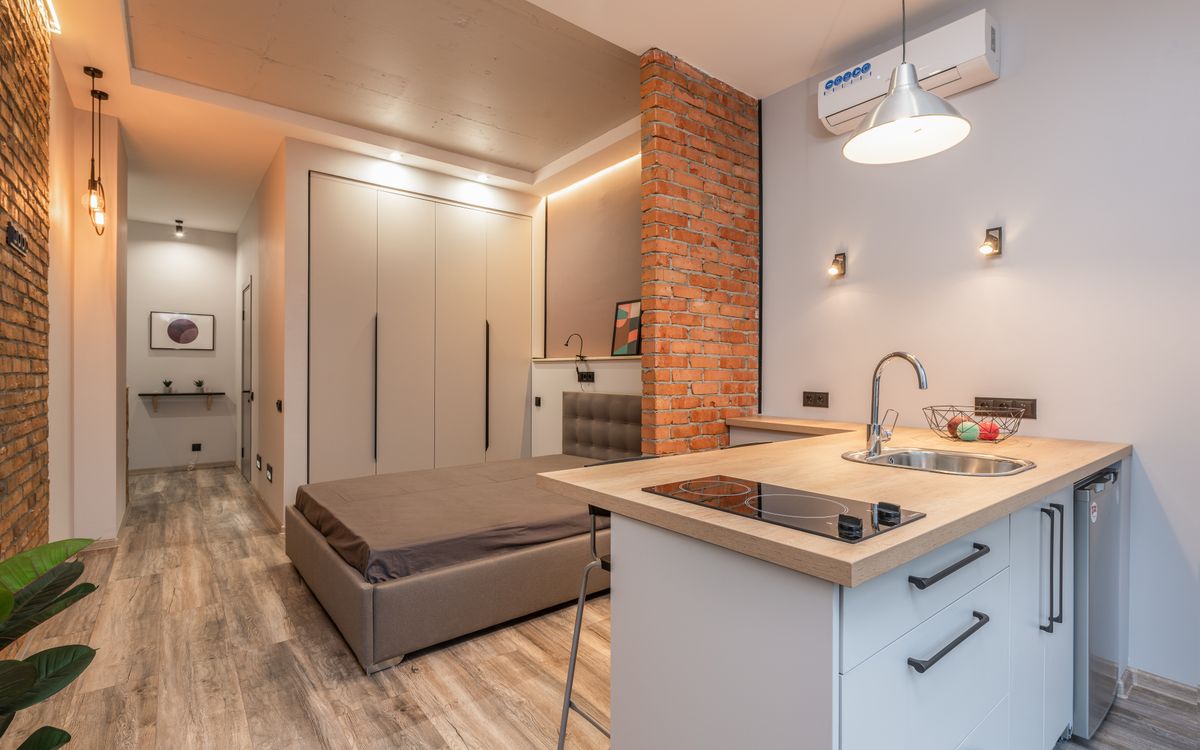
A Murphy bed is the most expensive way to save floor space, and sometimes the only one that works. No other piece of furniture gives you a full-size bed by taking 40-50 cm (16-20 in) off the wall. That gain is real - I have used it to turn home offices into guest rooms that still pass a walk-through - but it comes with rules: the cabinet is anchored to wall structure, the open bed projects more than two meters into the room, and the mattress must fit the cabinet, not the other way around. Buy one without checking those three things and the bed becomes the most inconvenient furniture you own.
What a wall bed demands from the room
Before any model comparison, the room has to pass four checks. These come straight from manufacturer installation requirements, and skipping them is how wall beds get returned.
- A structural anchor wall. The cabinet bolts into studs or masonry, and usually into the floor. Drywall alone will not hold it. In rentals, this usually means the landlord agrees to patch a few bolt holes at move-out.
- Ceiling height. A vertical queen needs a minimum anchoring-wall height around 231 cm (91.1 in) on current models. Horizontal beds need much less because the bed folds along its long side instead of standing up end to end.
- Projection room. A queen bed open on the floor extends roughly 234 cm (92 in) from the wall, and manufacturers ask for 75-90 cm (30-36 in) of clearance around the open bed for getting in and out. The bed occupies a bigger rectangle when down than any frame ever will.
- Baseboard removal. Most cabinets sit flush and require cutting or removing the baseboard behind them; a few models have a built-in notch instead. Check before the installer arrives, not during.
One habit I keep from studio projects: draw the open-bed rectangle on the floor with painter’s tape and live with it for a weekend. If the taped bed blocks the desk chair or the door swing, a Murphy bed was the wrong tool - a daybed might earn the same space at a fraction of the cost.
How I picked these three
I specified against the same shortlist: piston lift with a lock, wall-and-floor anchoring, a stated mattress thickness range rather than a vague “fits any mattress”, and a warranty long enough to outlive the mechanism. Every dimension and price below comes from the manufacturer’s own specification pages at the time of writing. Prices move, so verify the current figure before ordering.
The three models cover the three orientations that matter: a vertical cabinet for standard-ceiling rooms, a horizontal bed for low or sloped ceilings, and a sofa combo for a room that must be a sitting room first.
Bestar Pur 65W Queen Murphy Bed - the vertical workhorse
This is the cabinet I would put in a straightforward home-office-guest-room. The Pur line is Bestar’s simplest wall bed: a 164 cm (64.6 in) wide cabinet, 52 cm (20.3 in) deep and 223 cm (87.9 in) tall, with a dual-piston lift and flexible wood slats instead of a fixed platform. It takes queen mattresses 20-30 cm (8-12 in) thick and 27-41 kg (60-90 lb), supports up to 454 kg (1,000 lb) including the mattress, and the open bed extends 234 cm (92 in) from the wall. The anchoring wall needs a minimum ceiling height of 231 cm (91.1 in), and the mechanism mounts to both floor and wall.
Why it earns the first slot: it does the core job - folds down smoothly, sleeps like a real platform bed, disappears entirely - without paying for integrated storage you may not need. The cabinet is genuinely plain, which is a design decision rather than a flaw: in a tight room, a big blank panel reads calmer than a decorated one. The trade-off: at $1,600 it is a serious purchase for engineered-wood furniture, and you supply the mattress separately. If your wall is shorter than the 91.1-inch minimum, stop here and read the horizontal pick below.
The Lori Bed (Queen Horizontal) - for low ceilings and loft walls
Most wall beds assume you can stand a queen cabinet on end. The Lori Bed folds along the long side instead, so the closed cabinet is short and wide - the format that fits rooms where a window, a beam, or a sloped ceiling caps the wall at under 230 cm (91 in). It is built from furniture-grade plywood on a powder-coated steel frame, lifts on double-chamber gas pistons, and locks in both the open and closed positions. The manufacturer lists a 907 kg (2,000 lb) weight limit and takes mattresses up to 25 cm (10 in) thick, and the whole product carries a lifetime warranty. On the manufacturer’s own listing it carries a 4.9 (329) rating, the only one of these three with a rating I could trace to the source.
Two details make it the renter-friendliest of the three. The cabinet has a baseboard notch, so you may not need to cut anything, and it mounts with six screws into studs. The trade-off is price and labor: $3,949, and assembly is a 6-8 hour job for the flat-packed cabinet - the mechanism-free YouLift version costs less if you are willing to lift the bed with a partner. The horizontal format also eats wall width: measure for a bed-length cabinet, not a bed-width one.
Bestar Nebula Murphy Bed with Sofa (78W) - when the room must sit first
For a guest room that spends most of its life as a lounge, the Nebula pairing is the cleanest version I have found: a 198 cm (78 in) wide vertical wall bed with a pre-assembled hardwood-frame sofa docked in front of it. During the day it reads as a real sofa; at night you lift off the cushions and fold the bed down over the same footprint. Mechanically it matches the Pur above - dual pistons, flexible slats, queen mattresses 20-30 cm (8-12 in) thick, 454 kg (1,000 lb) limit, 231 cm (91.1 in) minimum ceiling, open bed extending 231 cm (91.8 in).
The honest caveat is the warranty split: the wall bed carries Bestar’s 10-year warranty, the sofa only one year. The sofa is real upholstery over a hardwood frame - sinuous coil suspension, D30 foam cushions - but it is not living-room-grade furniture, and heavy daily sitting will age it faster than the bed mechanism. The unit is also deep: 136 cm (53.5 in) with the sofa docked, so it needs a room that can spare both depth and the full open-bed projection. At $2,199.99 it replaces a sofa plus a guest bed, which is how I justify it on studio budgets.
The comparison, in numbers
| Bestar Pur 65W Queen Murphy Bed | The Lori Bed (Queen Horizontal) | Bestar Nebula Murphy Bed with Sofa (78W) | |
|---|---|---|---|
| Orientation | Vertical | Horizontal | Vertical + sofa |
| Closed cabinet | 164 x 52 x 223 cm (64.6 x 20.3 x 87.9 in) | Short and wide, bed-length | 198 cm (78 in) wide, 136 cm (53.5 in) deep with sofa |
| Min. ceiling height | 231 cm (91.1 in) | Far lower; folds along long side | 231 cm (91.1 in) |
| Mattress | 20-30 cm (8-12 in), queen, no box spring | Up to 25 cm (10 in) | 20-30 cm (8-12 in), queen, no box spring |
| Price | $1,600 | $3,949 | $2,199.99 |
Specifications from each manufacturer’s specification pages at the time of writing; confirm current figures before ordering.
Which mattress goes in
A wall bed is a platform bed wearing a cabinet, so the mattress rules are simple. Use one inside the stated thickness range - on the Bestar models, 20-30 cm (8-12 in) for a queen, 60-90 lb; on the Lori, up to 25 cm (10 in) - and skip box springs entirely, which will not close into any of these cabinets. Memory foam works well because it tolerates being stored vertically; a very soft hybrid can drift in its cover over time, so a firmer coil or foam model ages better. Whatever you buy, let the manufacturer’s thickness limit decide, not the showroom.
One more habit: close the bed with the same bedding width you sleep with. Fitted sheets stay put; quilted throws and thick toppers are the things that jam cabinet doors, and a topper that exceeds the thickness limit will slowly wreck the closing piston geometry.
Vertical or horizontal: the actual decision
The choice is made by the wall, not by taste. If the anchoring wall runs more than 231 cm (91.1 in) clear and at least a queen-bed-width plus margins long, a vertical bed is cheaper and simpler. If the ceiling is capped by a beam, a sloped roof, or a window - common in attic conversions and loft units - the horizontal format is not a compromise, it is the only format that installs. Horizontal cabinets also suit rooms where a long, low wall reads better than a tall one, which is a real styling gain in studios.
The failure mode I see most is measuring for the closed cabinet and forgetting the open bed. The queen projection of 234 cm (92 in) crosses most bedrooms’ short dimension entirely, which is why I tape the footprint before ordering.
Installation is a two-person, structural job
Every wall bed on this list anchors into studs or masonry and into the floor, with all three manufacturers stating that installation requires two people or a professional. Budget for it honestly: the Bestar cabinets ship in multiple heavy boxes, the Lori flat-packs to a 6-8 hour assembly, and any of them should be leveled after mounting so the pistons do the lifting rather than friction. None of this is difficult, but it is carpentry with consequences - an unanchored wall bed is genuinely dangerous, which is why the manuals do not soften the language. If you cannot bolt into the wall, you do not own the right room for a wall bed yet.
Who should skip it
A Murphy bed earns its price when the room needs to change identity daily: office by weekday, guest room on weekends. If the bed gets used a few nights a year, a proper daybed or a trundle costs less, needs no drilling, and never asks you to clear the desk before bed. And if the bed lives permanently in one position, a regular low frame with storage drawers underneath stores more per dollar than any cabinet. The wall bed is a brilliant specialist tool; the mistake is buying a specialist when the room wanted a generalist.
The picks
Some links below are affiliate links — we may earn a commission at no extra cost to you.
Bestar Pur 65W Queen Murphy Bed
Best for: Standard-ceiling rooms that need a full-time guest bed over a desk or gym
The simplest competent vertical wall bed: dual-piston lift, flexible slats, floor-and-wall anchoring, and a stated mattress range instead of vague compatibility. The trade-off: it is a plain engineered-wood cabinet at a four-figure price, and the anchoring wall must clear 91.1 inches of ceiling.
The Lori Bed (Queen Horizontal)
Best for: Rooms with low or sloped ceilings where a vertical cabinet cannot stand
The horizontal format folds along the long side, so it installs under windows, beams, and roof slopes that stop a vertical cabinet. Plywood and steel construction, gas pistons, locks in both positions, lifetime warranty. The trade-off: $3,949 plus a 6-8 hour flat-pack assembly, and the cabinet needs a bed-length wall.
Bestar Nebula Murphy Bed with Sofa (78W)
Best for: Guest rooms that must work as sitting rooms most of the year
A vertical queen wall bed with a pre-assembled hardwood-frame sofa docked in front, so one footprint covers both daytime seating and sleep. The trade-off: the sofa carries a one-year warranty against the bed's ten, and the combined unit is 53.5 inches deep before the bed even opens.
Comparison
| Specification | Bestar Pur 65W Queen Murphy Bed | The Lori Bed (Queen Horizontal) | Bestar Nebula Murphy Bed with Sofa (78W) |
|---|---|---|---|
| Orientation | Vertical | Horizontal | Vertical + sofa |
| Minimum ceiling height | 91.1 in (231 cm) | Far lower - folds along long side | 91.1 in (231 cm) |
| Mattress accepted | Queen, 8-12 in thick, no box spring | Up to 10 in thick | Queen, 8-12 in thick, no box spring |
| Open bed projection | 92 in (234 cm) | Not stated on the spec page | 91.8 in (231 cm) |
| Anchoring | Wall + floor | 6 screws into studs | Wall + floor |
Sources
- Manufacturer specification pages: bestar.com (Pur 65W and Nebula Murphy Bed with Sofa 78W), loribeds.com (The Lori Bed, Queen Horizontal) - accessed at time of writing
- Assembly and anchoring requirements as stated in each manufacturer's product specifications
Frequently asked questions
- Do Murphy beds need a special mattress?
- They need a mattress inside the cabinet's limits - typically 20-30 cm (8-12 in) thick for a queen, with no box spring. Memory foam and standard innerspring both work; check the model's stated thickness range before buying the mattress.
- Can you sleep on a Murphy bed every night?
- Yes. Manufacturers design modern piston-lift wall beds for nightly use, and slat supports perform like a platform bed. What matters more is the mattress: pick one within the stated thickness and weight range and it behaves like a normal bed.
- How much ceiling height does a Murphy bed need?
- A vertical queen cabinet generally needs at least 231 cm (91.1 in) of clear ceiling height at the anchoring wall. Horizontal beds fold along the long side and need far less height, which is why they suit rooms with low or sloped ceilings.