Guides
The Best Bedroom Mirrors for Dressing and Light
Three bedroom mirrors that earn their place - a freestanding floor mirror, a full-length wall mirror, and a slim mirror cabinet - with verified sizes.
By Mara Bennett · Published November 5, 2026 · Updated November 5, 2026
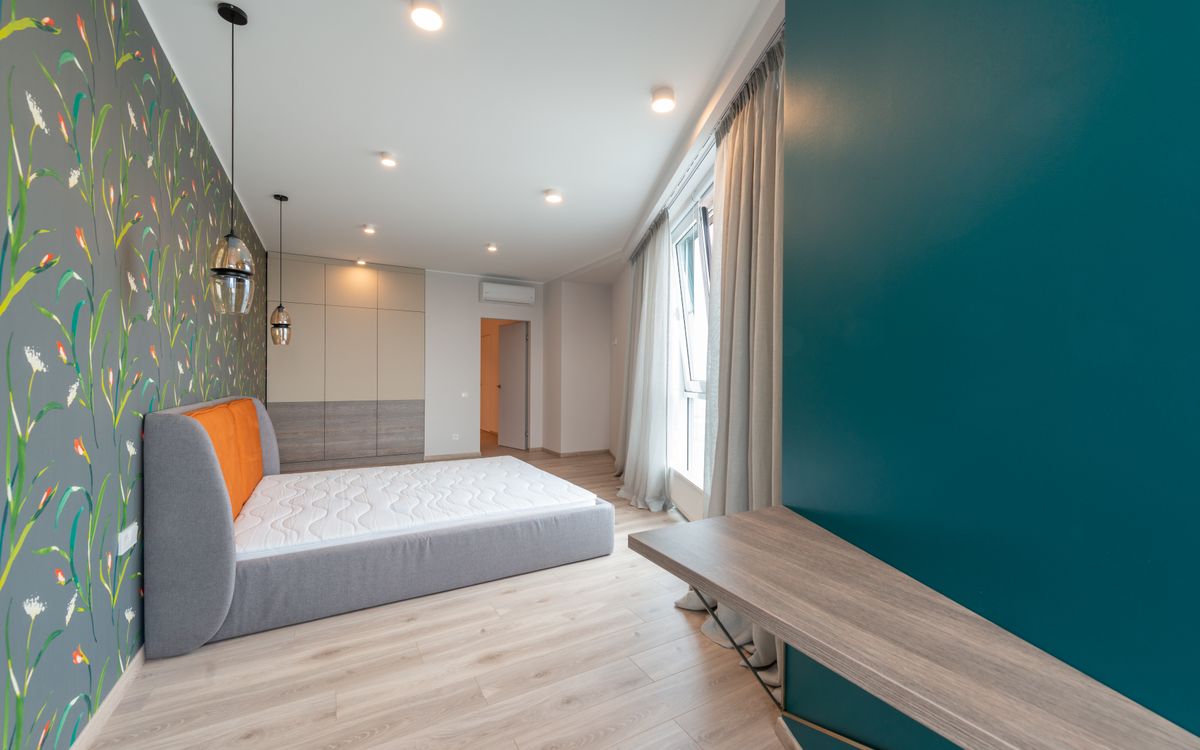
A bedroom mirror is one of the few objects that works two jobs at once. It is the dressing tool the morning routine leans on, and it is a light instrument - the cheapest way to double a window’s effect in a room that has one. But the market splits into floor mirrors, wall mirrors, and mirror cabinets, each suited to a different room, and the wrong type in the wrong room fails quietly: too narrow to dress by, bolted where the light never reaches, or standing loose in a room with a cat.
How I chose these three mirrors
My criteria are practical rather than editorial. Each pick must cover one of the three placements a bedroom actually offers - open floor, usable wall, or tight corner - must be currently in production and verifiable against the manufacturer’s own specification pages, and must solve the placement’s characteristic problem rather than merely decorating it.
That rules out a lot. Unverifiable listings with invented specifications do not make the cut, and neither does anything whose price I cannot confirm on the maker’s own site. Everything below was checked against the manufacturer’s product pages at the time of writing, with sizes and prices taken directly from those pages. I also let each pick have a visible trade-off, because every mirror that solves one problem creates another, and the honest version of a recommendation includes that cost.
The result is three mirrors from one manufacturer, which is a coincidence of availability rather than preference - IKEA simply publishes complete, checkable specifications for every product it sells, which is exactly what this list requires.
What a bedroom mirror actually does
Two functions, and they pull in slightly different directions.
As a dressing tool, a mirror needs width and height. A full-body view for an average adult takes a surprisingly small pane - physics says a mirror only needs to be about half your height if it is positioned correctly - but it also needs around 40 cm (16 in) of width or your shoulders get cropped every time you check a fit. Height position matters as much as size: the bottom edge should reach below the knee and the top edge above the head.
As a light instrument, a mirror needs placement. Set opposite or beside a window, a mirror pushes daylight deep into a room; set opposite a lamp, it doubles the warm light for evening. Set opposite the bed, it pushes early sun straight into the eyes of whoever is sleeping, which is why I treat that spot as the one placement to rule out.
Most mirrors do one of the two jobs well. The picks below are sorted by which job their placement demands.
The best floor mirror: IKEA KARMSUND floor mirror (40x167 cm)
For bedrooms where nothing can be drilled - renters, first apartments, rooms whose walls are plaster too crumbly to trust - a mirror that stands on its own frame is the only honest recommendation, and the IKEA KARMSUND floor mirror (40x167 cm) is the one I point people to. It stands on a black metal frame, the glass measures 40 cm (15 3/4 in) wide by 167 cm (65 3/4 in) tall, and it carries a safety film that reduces damage if the glass breaks. It has a 4.7 rating across 954 reviews on the manufacturer’s site, which for a mirror is a strong signal at this price: $99.99.
What lifts it above ordinary standing mirrors is the storage hiding behind the glass: hooks and a rail on the back panel hold tomorrow’s outfit, which turns the mirror into a small dressing station and clears a chair back that would otherwise carry the clothes. The crown detail at the top can be added or removed, so the silhouette can go traditional or stay plain.
The trade-off is width. At 40 cm (15 3/4 in) the glass shows a narrower view than a full-width mirror, so fitting checks mean small steps, and the frame does claim floor space permanently. It suits rooms that can spare a column of floor - typically beside a wardrobe or in the corner nearest the window, where the standing position doubles as the light-bouncing position.
The best wall mirror: IKEA NISSEDAL mirror (65x150 cm)
When a wall is available and the budget wants a full-length view for the least money, the IKEA NISSEDAL mirror (65x150 cm) is the benchmark. The glass measures 65 cm (25 5/8 in) wide by 150 cm (59 in) tall - wide enough that shoulders and outfits stay in frame - it hangs horizontally or vertically depending on the wall, and it carries the same safety film treatment. The price is $99.99, and its 4.7 rating across 5,674 reviews makes it one of the most-reviewed full-length mirrors in this class.
Sixty-five centimetres is the number that matters. That extra width over a typical floor mirror is what makes fitting checks comfortable rather than a shuffle, and 150 cm (59 in) of glass still delivers a full view when hung at the right height, because of the half-height rule noted above. Hung vertically beside a window it also behaves as a daylight instrument, and hung horizontally above a dresser it becomes a wide vanity mirror.
The trade-off is the mounting. This mirror wants a wall and a screw, which excludes the no-drill bedrooms entirely, and once hung it is committed - repositioning means patching. It suits rooms where one wall can be given over to the dressing job permanently, ideally the wall that catches the most daylight.
The best mirror for tight rooms: IKEA ENHET mirror cabinet with door (46x17x76 cm)
Small bedrooms rarely lack a wall - they lack floor, and every piece of furniture competes for it. The IKEA ENHET mirror cabinet with door (46x17x76 cm) answers that by hanging on the wall and taking none: a 46 cm (18 in) wide, 76 cm (30 in) tall cabinet whose door is a mirror, with 17 cm (6 5/8 in) of enclosed storage behind it for the daily clutter - skincare, watches, glasses, the small things that otherwise colonise a nightstand. The price is $149.99 at the time of writing.
This is the pick I treat as furniture rather than accessory. A mirror at 76 cm (30 in) tall is not a dressing mirror - it is a face-and-torso mirror - so it handles the exit-check job by the door or the vanity job above a low dresser, while the storage behind the glass does the daily work that makes a small room read tidy. Mounted beside the bed it can even replace a second nightstand’s worth of storage.
The trade-offs are clear. It needs secure wall fixing into something solid, it is shallower in every dimension than the other two picks, and its white cabinet look is neutral rather than characterful. It suits the smallest rooms, where every item must justify its footprint twice.
How the three compare
| IKEA KARMSUND floor mirror (40x167 cm) | IKEA NISSEDAL mirror (65x150 cm) | IKEA ENHET mirror cabinet with door (46x17x76 cm) | |
|---|---|---|---|
| Form | Freestanding on metal frame | Wall-hung glass in fibreboard frame | Wall-mounted cabinet, mirror door |
| Glass | 40x167 cm (15 3/4x65 3/4 in) | 65x150 cm (25 5/8x59 in) | 46x76 cm (18x30 in) |
| Mounting | Stands on its own frame | Screw into wall, vertical or horizontal | Secure wall fixing required |
| Storage | Hooks and rail behind the glass | None | Enclosed shelf space behind door |
| Price | $99.99 | $99.99 | $149.99 |
Specifications and prices as listed by the manufacturer at the time of writing - verify current figures before ordering.
Read as a set, the split is clean. The KARMSUND solves the no-drill problem, the NISSEDAL solves the full-width-view problem for the same money, and the ENHET solves the floor-space problem by adding storage. One of those three problems describes almost every bedroom.
Where a mirror earns its place in a bedroom
Placement decides whether any of these perform. Three placements cover the cases.
Beside a window, perpendicular to the glass, a mirror catches daylight all day and throws it across the room - the single hardest-working spot, and the natural home for the NISSEDAL or the KARMSUND if the corner is free. Opposite the dresser or vanity, a mirror completes a dressing station, which is where the ENHET does its best work. Near the exit door, a tall mirror handles the last check before leaving, which is the check that actually gets used every day.
The placement I rule out is directly facing the bed. It is not superstition - it is sunlight. A mirror across from a bed throws morning glare at whoever is sleeping, and the reflection moving in a dark room disturbs more people than it charms. Side placement delivers the same visual benefits without the wake-up call.
Sizing and mounting without surprises
Three numbers prevent most mirror mistakes. First, height: hang so the mirror’s centre sits roughly at eye level, which for a mixed household means centring around 155-160 cm (61-63 in) from the floor. Second, clearance: a leaning or freestanding mirror needs its footprint free of door swings and walkway pinches - the measure sheet I use for every other piece of furniture applies to mirrors too, since a mirror is furniture that happens to be glass. Third, anchoring: any mirror that leans, however briefly, needs the wall bracket - freestanding does not mean tip-proof, and top-heavy glass is the one bedroom object that fails dangerously rather than inconveniently.
For wall-hung mirrors, find the fixing before you buy: plaster alone does not hold a 65x150 cm (25 5/8x59 in) pane, so know where the studs or solid points are. If the wall story is complicated, the small-bedroom sizing guide puts mirror placement in the wider context of making a tight room work visually.
Safety, care, and the last checks
Safety film - a backing layer that holds shards together if the glass breaks - is the one spec line I treat as non-negotiable in a bedroom, where bare feet are standard equipment. Both the KARMSUND and the NISSEDAL carry it; treat any mirror without a stated safety treatment as a candidate to skip.
Care is minimal: a soft cloth and glass cleaner, and attention to the one spot people forget - the back edge, where humidity slowly corrodes the silvering. In rooms with a damp exterior wall, mount with a small air gap rather than flat against the plaster.
The final check happens a week after the mirror is placed. Stand where you normally stand to dress. If the view is cropped, the mirror is hung too low or too high; if the reflection is dark, the mirror is facing the wrong way for light; if the mirror fights the door swing, it moved into the wrong spot. All three are ten-minute fixes, and they are the difference between a mirror that lives in the room and one that merely hangs in it.
The picks
Some links below are affiliate links — we may earn a commission at no extra cost to you.
IKEA KARMSUND floor mirror (40x167 cm)
Best for: Renters and rooms where nothing can be drilled
Stands on its own black metal frame with no wall fixing required, and the hooks and rail behind the glass hold tomorrow's outfit so the dressing job stays in one spot. Safety film backs the glass, and the 4.7 rating across 954 reviews is strong for the class. The trade-off: the 40 cm glass gives a narrow head-to-toe view, and the frame claims floor space permanently.
IKEA NISSEDAL mirror (65x150 cm)
Best for: Full-width dressing views on a tight budget
The 65 cm (25 5/8 in) glass is wide enough that shoulders and outfits stay in frame, it hangs horizontally or vertically, and it is one of the most-reviewed full-length mirrors in the class - 4.7 across 5,674 reviews. The trade-off: it requires a screw into a suitable wall, which rules out no-drill rooms, and repositioning means patching.
IKEA ENHET mirror cabinet with door (46x17x76 cm)
Best for: Small bedrooms where the floor must stay clear
Hangs on the wall and takes zero floor, pairing a 46x76 cm mirror door with 17 cm of enclosed storage for the small daily clutter that otherwise colonises nightstands. The trade-off: the mirror covers face and torso rather than head to toe, the storage is shallow, and it needs fixing into something solid.
Comparison
| Specification | IKEA KARMSUND floor mirror (40x167 cm) | IKEA NISSEDAL mirror (65x150 cm) | IKEA ENHET mirror cabinet with door (46x17x76 cm) |
|---|---|---|---|
| Form | Freestanding on metal frame | Wall-hung glass in fibreboard frame | Wall-mounted cabinet, mirror door |
| Glass | 40x167 cm (15 3/4x65 3/4 in) | 65x150 cm (25 5/8x59 in) | 46x76 cm (18x30 in) |
| Mounting | Stands on its own frame | Screw into wall, vertical or horizontal | Secure wall fixing required |
| Storage | Hooks and rail behind the glass | None | Enclosed shelf space behind door |
| Price | $99.99 | $99.99 | $149.99 |
Sources
- Manufacturer product pages, IKEA US (ikea.com/us/en): KARMSUND floor mirror art. 402.949.82, NISSEDAL mirror art. 505.037.77, ENHET mirror cabinet with door art. 706.230.43 - sizes, features, and safety-film details accessed at the time of writing
- Prices and review ratings cross-checked via the IKEA US search API (USD) at the time of writing
Frequently asked questions
- How big should a bedroom mirror be?
- For dressing, a mirror at least 40 cm (16 in) wide and 150 cm (59 in) tall covers a full view for most people. Because a mirror only needs to reflect about half your height to show you head to toe, a 150 cm glass mounted correctly works even if you are taller than the mirror.
- Where should you not put a mirror in a bedroom?
- I avoid facing the mirror directly across from the bed - early light bounces straight at sleeping eyes - and I keep mirrors out of the door swing. Beside a window or opposite a wall that catches light are the placements that work hardest.
- Do leaning floor mirrors need to be attached to the wall?
- Yes, whenever children, pets, or Clumsy adults share the room. Freestanding mirrors should still be anchored to the wall with the bracket most manufacturers include, because a top-heavy mirror tipped by a knock is genuinely dangerous.